2O1 @Netdriver_Mk_1
(void) Joined July 2022-
Tweets186
-
Followers16
-
Following1K
-
Likes1K

Tools like Snaffler are great, but crawling SMB shares creates a telemetry nightmare. You instantly light up the SIEM with : - 5140 / 5145 (Network Share Access) - 4656 / 4663 (Object & File Access) So I built Invoke-WindowsSearch to query the native Windows Search DB (OLE DB) directly via WinRM/RPC, It extracts the targets without touching the actual files, completely bypassing the 4663 and 5145 detection footprint. Trade-offs: Requires the WSearch service (disabled by default on Server OS) and lacks complex regex capabilities. Know your environment before execution. #RedTeam #ActiveDirectory #OPSEC #ThreatHunting #PowerShell

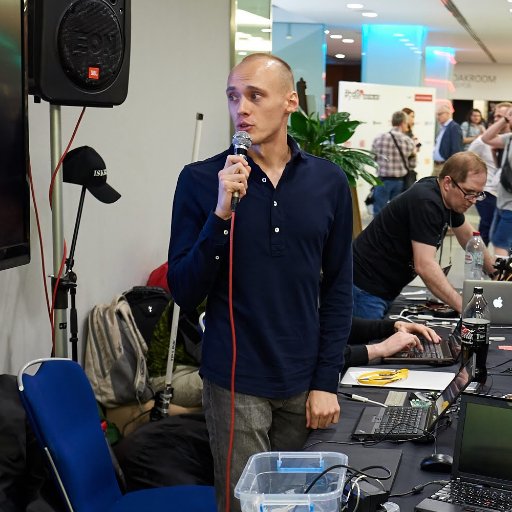
Updates for the Linux kernel exploitation collection 😋 github.com/xairy/linux-ke…

Solved the challenge with - InFoFinder_Pro The tool is available on my GitHub: github.com/techenthusiast… #OSINT #Cybersecurity


🕵️ Our new OSINT CTF challenge is live! This week’s challenge involves conducting an investigation on a phone number linked to a suspected scammer. Play here: ctf.osintnewsletter.com


10 backend projects that teach you scalability: 0. Notification system 1. Video processing queue 2. Search autocomplete 3. Real-time leaderboard 4. Payment retry engine 5. Email delivery service 6. Analytics event pipeline 7. Collaborative text editor 8. Distributed job runner 9. Social media feed

Hugging Face security analysis: ~70,000 live secrets and API keys, private repos, and leaky pics! 🤖🤗💦🔑😈 More details on: LinkedIn: linkedin.com/posts/dlaskov_… Substack: it4sec.substack.com/p/hugging-face…


Anti-Cheat vs EDR Bypass — Understanding the Techniques Behind Detection Evasion 💀🔥 A deep technical comparison between game anti-cheat bypasses and Endpoint Detection & Response (EDR) evasion techniques. Key Topics Covered • Anti-Cheat vs EDR Architecture • Code Injection & DLL Loading • Function Hooking Techniques • Packet Manipulation Concepts • Process & Memory Abuse • Rootkit Fundamentals • Anti-Debugging Methods • String & Code Obfuscation • Polymorphism & Detection Evasion • Windows API Usage Analysis Why It Matters Although anti-cheat systems and EDR solutions protect different environments, many underlying detection and evasion concepts overlap. Understanding these similarities helps security professionals improve detection engineering, malware analysis, threat hunting, and defensive research. Ideal For • Threat Hunters • Malware Analysts • Detection Engineers • Reverse Engineers • SOC Analysts • Blue Teamers • Security Researchers A valuable resource for understanding how modern detection systems work—and how defenders can build stronger security controls. 🔗 whiteknightlabs.com/2024/02/09/a-t… #CyberSecurity #ThreatHunting #MalwareAnalysis #DetectionEngineering #BlueTeam #SOC #ReverseEngineering #WindowsInternals #EDR #ThreatResearch


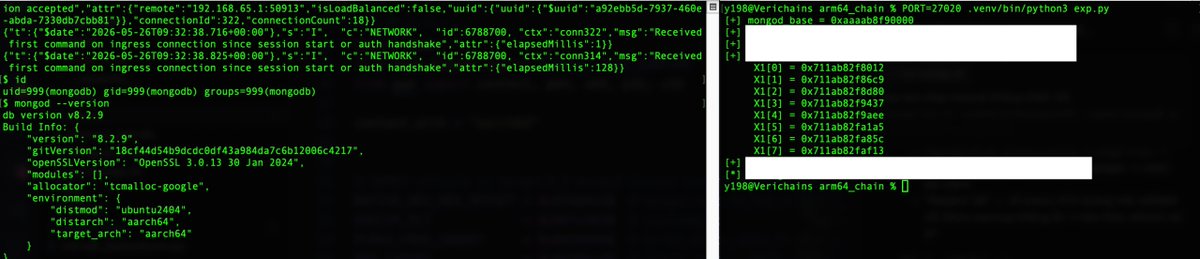
Found an 8 year old RCE in MongoDB. Sadly, MongoDB had already found it internally. Technical writeup after the patch is released. Sad Friday... #bugbounty #0day #rce

Who knew a really long string could make an Entra ID login disappear from the logs entirely? In our #blog, @nyxgeek breaks down how overflowing #Azure's sign-in logging mechanism allowed access tokens to be issued without a single log entry. Read it now! hubs.la/Q047xTVc0

我写了一份 Obsidian 的同步教程合集 你可以勾选你想要同步的设备、偏好的同步方式、以及对同步的特别要求,然后网站会给你推荐适配的(我写的) Obsidian 同步教程。 网址:21obsidian.com/sync 这应该是全网最全 每个步骤都带图的 Obsidian 同步教程了


How did he create Linux without OPUS 4.8 ??



"signalling logs, packet captures, routing data, and other telecommunications sources to trace the methods and origins of advanced surveillance activity. This analysis identified 4G infrastructure associated with operator networks based in Israel, the United Kingdom, and the Channel Islands." citizenlab.ca/research/uncov…

CVE-2026-40369: Arbitrary Kernel Address Increment via NtQuerySystemInformation TL;dR: One syscall from any unprivileged process, even inside Chrome’s renderer sandbox, can increment arbitrary kernel memory addresses, giving SYSTEM privilege escalation pwn2nimron.com/blog


Found a cool bug at Meta. From misconfigured Grafana instance to R/W access on 507 private Meta repositories. Wrote up the full chain here: sectricity.com/blog/misconfig… $157k bounty awarded by @metabugbounty

Bug Bounty Tip - One way I use Google dorks to discover additional assets owned or managed by a target is by identifying unique text that appears across their public-facing systems. This is especially useful when the program scope states that all public-facing assets or IT infrastructure are in scope. For example, if the target’s main domain is example.com, I’ll first browse the site and look for wording, banners, error messages, or any text that uniquely identifies the organization. Once I find something distinctive, I use it in a Google dork to search for other assets that may belong to the same target. A simple example would be ( "Hello world" -".example.com" ). If multiple known subdomains display the phrase “Hello world,” and you’ve confirmed it’s specific to the target, searching that phrase while excluding the main domain can help uncover other related systems, forgotten subdomains, third-party hosted assets, or exposed services tied to the organization. Also, don’t forget to validate that the domain or subdomain actually belongs to the target before testing it. A good way to confirm ownership is by checking where the CNAME record points to, reviewing DNS records, or looking into the domain/subdomain registrar and hosting information.


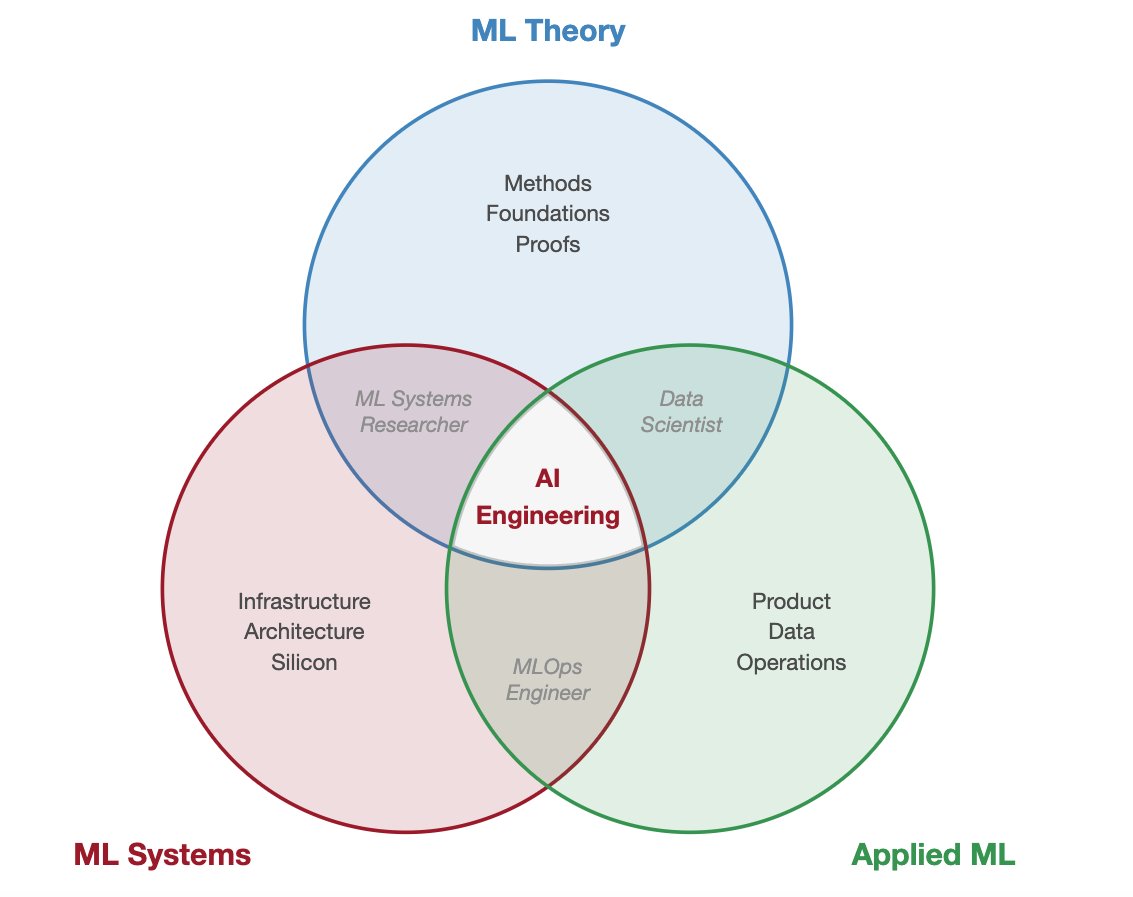
Free Book, Machine Learning Systems, CC License An open-source curriculum that grew into a global movement for AI engineering education. github.com/harvard-edge/c… AI engineering is the discipline of building efficient, reliable, safe, and robust intelligent systems that operate in the real world, not just models in isolation. The mission is to establish AI engineering as a foundational discipline alongside software engineering and computer engineering, by teaching how to design, build, and evaluate end-to-end intelligent systems. The physics of AI engineering. A rigorous, principles-first treatment of how ML systems are built, optimized, and deployed — from a single machine to fleet-scale infrastructure. A complete curriculum for AI engineering. Volume I: Introduction to Machine Learning Systems Volume II: Machine Learning Systems at Scale mlsysbook.ai


📉 El fin de "leer el código": La herramienta Open Source que destruye los SaaS de documentación? Llegas a un nuevo equipo. El código tiene 200,000 líneas. Tu Tech Lead te dice: "ve leyéndolo para entenderlo". Abres 400 archivos, te abrumas y cierras la laptop. Pierdes tres días leyendo código que no te enseña nada sobre el sistema real. Understand-Anything (44.4k estrellas) acaba de solucionar esto para siempre. Es un pipeline multi-agente que analiza todo tu repositorio y lo transforma en un mapa de conocimiento interactivo donde puedes clicar, hacer zoom y preguntar lo que quieras. Lo que cambia las reglas del juego: 🧠 Pipeline Multi-Agente: Lee cada archivo, función y dependencia para entregarte un dashboard visual donde cada nodo te da un resumen en texto plano. 🎯 Domain View: No te muestra carpetas aburridas; mapea tu código según la lógica de negocio y los flujos reales del producto. 💬 Preguntas con Contexto: Puedes escribir directamente: "¿Dónde ocurre la autenticación?" o "¿Qué llama a esta función?" y te lleva al punto exacto. 🔌 Integración Total: Funciona de forma nativa como plugin para Claude Code, Cursor, Copilot y Gemini CLI. La gran diferencia con el resto: La mayoría de las herramientas generan diagramas complejos que solo sirven para impresionar en una presentación, pero no te ayudan a resolver un bug el lunes por la mañana. Este mapa está diseñado exclusivamente para enseñarte cómo encaja cada pieza. SaaS como Swimm o Mintlify te cobran cientos de dólares al mes y obligan a subir tu código a sus servidores. Understand-Anything: $0. Cualquier tamaño. En tu máquina local. Privado y libre para siempre (Licencia MIT). El Siguiente Nivel (Idea para Builders): CI/CD Auto-Docs: Un GitHub Action que regenere el mapa visual en cada Pull Request para ver el impacto del cambio antes de mergear. Onboarding Vectorial: Conectar el grafo a un bot de Slack para que los nuevos devs pregunten dudas de la arquitectura y el bot les devuelva la ruta visual exacta. Enlace al repositorio en los comentarios. Guarda este post en marcadores antes de que se pierda en el feed 🔖


How aware are modern compilers of exact microarchitectural layouts? Quite a lot…in one very specific way. Intel x86 is *not* the same as AMD x86. Sure…it’s the “same ISA” in the broadest sense, but the individual instructions often take different numbers of cycles. You want to stall as little as possible, so the order your instructions are arranged is somewhat important. Technically, something like “AMD Zen 3” ordering on an Intel Skylake is sub-optimal. If you look at LLVM, you’ll notice these X86Sched*.td (TableGen) files. Just about every x86 CPU generation has their own version. It defines things like ROB Size, issue width, and misprediction penalties (in terms of cycles). What’s fascinating is how much of this is “guessed” (reverse-engineered) vs “revealed” by the hardware vendors. From what I understand, Intel/AMD/etc will *sometimes* lend a helping hand / give some hints…but less than you’d expect. It’s a very weird situation when you think about it. I assume vendors are tight-lipped about exact latencies for competitive secrecy…yet those are the exact things you’d need to know to extract the most performance out of your compiler! If anyone knows other reasons for the secrecy, I’d love to hear it!


そういえば気づいたらリチェルカが発表していたLLMと難読化されたファイルのRevに関するペーパーが公開されていた。 ndss-symposium.org/wp-content/upl…

Five-bug chain in Samsung Galaxy Store leading to arbitrary local APK install (@bugscale) bugscale.ch/blog/here-we-g… #infosec


Kevin @fastbluescreen
0 Followers 4 Following
Sarah @chazzitsarah
142 Followers 2K Following Exploring the intersection of technology, creativity, and social impact. Shaping the future, one idea at a time.
Artiza @tantainguyen021
4 Followers 208 Following
阿菇kinoko @Usami_Kinoko
202 Followers 1K Following 🍀 阿菇~ | 💻web developer&cyber security | 🎨pixel art&UI design | 🌸ACG fan | ☀️to be outgoing | 📷 studying photography | tg: https://t.co/ux8wB7zQNJ
新月 @fubukiyokiyoki
3K Followers 5K Following a.k.a singetu0096 Network | OffensiveSecurity | CTF | BugBounty 白上フブキと蒼宮よづりと羽澄さひろが好き CTF team:@sknb_ctf , @Water_Paddler icon:@hasikureteruna Thanks!
Ivy(🔴,💊) @AtriAzuki
157 Followers 343 Following ActivateCombatProgram●●▼ \\never let you hurt us again\\RaiseYourIdeaCode●DETERMINATION●▼ \\the soul shines brighter when we know pain,

Ju1y @Jack_Ju1y
115 Followers 246 Following Building @TapNow_AI | Developer of @planori_app | Author of linkook | OSCE3 & OSCP Certified
大导寺美生子 @ddosmishng4071
3 Followers 155 Following


IPUSIRON @ipusiron
30K Followers 31K Following ミジンコに転生してLv.1から人生をやり直しています。主な著書『ハッキング・ラボのつくりかた 完全版』、翻訳本『暗号解読 実践ガイド』等。活動内容は https://t.co/qDDjluO3yj | 関心事:読書、倹約、ポイ活 | 欲芋は https://t.co/Uv2ZT4gtfD | 詳細は↓
宮舞モカ公式/AH... @miyamaimoca
26K Followers 12K Following 株式会社AHSの公式キャラクターアカウントです。 宮舞モカ。高校2年生。紅茶好きでお気に入りのお店は「喫茶店マキ」。人間の友達を作るのは苦手だけど猫と友達になるのは得意です。ハッシュタグは #宮舞モカ #みゃーまーと ※スパム対策のためDMは見ておりません
우여딘(2) @707YgHqfRB73995
104 Followers 4K Following

みしまひろじ(... @mmu_yoshikiti
9K Followers 3K Following みしまひろじの広報・告知などを行っている健全なアカウントです。 ご連絡→[email protected]
The OSINT Newsletter @osintnewsletter
21K Followers 23 Following OSINT news, tools, tactics, and techniques
#OSINT to Educate @techniquesOsint
4K Followers 100 Following OSINT | GEOINT | Tools & techniques | Digital Investigations | Conflict Zones Monitoring Techniques🔎
Tom Dörr @tom_doerr
210K Followers 3K Following Follow for posts about GitHub repos, DSPy, and agents Subscribe for top posts DM to share your AI project (Due to volume of DMs I'll prioritize subscribers)
cr3ghost @cr3ghost
2K Followers 346 Following A university student passionate about reverse engineering, exploit development, (de)obfuscation, anti-cheats, malware analysis, detection engineering.

xsser @xsser_w
2K Followers 2K Following pua skill author, A skill that puts your AI agent on a Performance Improvement Plan.

Saito @SaitoWu
16K Followers 649 Following 🌈 创业 10 年,👨🚀 现投身硬地骇客 🤨 正在探究这个世界是如何运转 👉🏻 Ex🦄 Co-Founder 👉🏻 Podwise https://t.co/zwrz2oB0mw 👉🏻 GitLab Alumni https://t.co/fCTGsoZUuc 🪙 每个人都应该拥有一个小生意
Dominic Alvieri @AlvieriD
20K Followers 325 Following Cybersecurity Analyst | Security Researcher | CTI Deleted my own Facebook and hacked yours. https://t.co/jpm0COr5fY
FuzzingLabs @FuzzingLabs
9K Followers 4K Following Research-oriented Cybersecurity startup specializing in #fuzzing, Vulnerability Research & Offensive security on Mobile, Browser, AI/LLM, Network & Blockchain.


Shellter @shellterproject
5K Followers 2 Following AV Evasion Artware || Shellter v7.2 - Executable SHA256: ea07a52eca82b6383c7aa224652e55e0d1701f0779def736977ecadff819049c || Shellter Elite || Dev: @kyREcon
Seokha Lee @wh1ant
2K Followers 194 Following
Eib @eib_____
130 Followers 437 Following The World is Yours # Bug Bounty Blog @ https://t.co/ccm9ey1x1r

GG @oldfresher
4K Followers 266 Following
みんとあいす@�... @asatsukimint
127K Followers 977 Following イラストレーター🤍絵師100人展/単行本「シークレット・インモラル」発売中/ラノベ挿絵 など アカウントは成人向けです https://t.co/bOHw8ZlCqf
AmirMohammad Safari @AmirMSafari
8K Followers 410 Following Part-time bug hunter, full-time thinker of thoughts nobody asked for
Anduril Industries @anduriltech
245K Followers 292 Following Anduril is shaping the future of defense, transforming U.S. & allied military capabilities with advanced technology.
呉マサヒロ@新... @cle_masahiro
492K Followers 2K Following クレスタ(CLESTA)というサークルで活動してます。 【作品】Fanza:https://t.co/RWjuav9sIt DLsite : https://t.co/t0O49S5WWM 【支援】 Fantia:https://t.co/7fUwiO51iI Fanbox : https://t.co/fS3NBknIiH
Chi-en (Ashley) Shen ... @ashl3y_shen
5K Followers 1K Following Security researcher @TalosSecurity / Ex-Google TAG / Black Hat USA & HITCON Review Board / Organizer of @rhacklette41. My tweets are my own opinion.
愛染ぽち🔞 @AizenPochi
231K Followers 345 Following FANBOX▸https://t.co/23cNhhCbsj⠀ Fantia▸https://t.co/fF6ClyOCAW⠀ DLsite▸https://t.co/oeuz3CtLYp⠀ FANZA▸https://t.co/yPFzMGkJVu⠀ @AizenPochi2 #ぽちFA
大罗SEO @daluoseo
11K Followers 1K Following 出海 Growth Marketing / SEO专家 | 提供SEO咨询,优化服务以及高权重外链 | 油管: 大罗SEO Partner @ HashMatrix
鳥三@CG集製作中 @tori33
164K Followers 4K Following 絵とか描いてる気もします。ちょっとだけえっちな絵が好きです。ツイートは概ねガンダムの話してます pixiv(https://t.co/8CIo51DToi)
SEKTOR7 Institute @SEKTOR7net
17K Followers 349 Following Homo Aptus. Vincit qui se vincit - Publilius Syrus. Consulting, Training, Technology, Cyber domain, and more... @x33fcon founder.
小花衣こっこ�... @kokko_kohanai
15K Followers 833 Following 小花衣(こはない)こっこです🌸同人声優/ご依頼募集中🐣discord まで✉️discord推奨(kokko_kohanai) DM見れません✖︎ ⋯スタ録⇒冬以降○お問合せ下さい icon ちてたん様
VMRay @vmray
4K Followers 2K Following Sandboxing reinvented for the threats of today - and tomorrow. | Imprint: https://t.co/yZtPfo2ySF
Caitlin Condon @catc0n
4K Followers 3K Following Adventurer. Takes a lot of photos, calls many places home. Research VP @VulnCheckAI. Previous research director @Rapid7 / @metasploit. Opinions mine. She/her.
ShadowOpCode @ShadowOpCode
1K Followers 171 Following Malware analyst & reverse engineer 🧠 Threat intel on stealers, RATs, live campaigns 🕵️ Technical analysis. No buzzwords. 📍DM open for research collabs
Mahmoud Al-Qudsi @mqudsi
35K Followers 677 Following My name is my watermelon. Tech tweets on hold while we fight for 🇵🇸. Don’t forget Syria, Sudan, and Congo.
obscaries ❘ AppSec @obscaries
4K Followers 1K Following ✦ Application Security Researcher ✦ Breaking the modern web stack ✦ Focused on client-side security ✦ Impact-driven tactics ⚡ 🌿 Open to collaborations
unlockParent64 @stop_spammerz
14K Followers 5K Following
Giuseppe Calì @_gcali
326 Followers 164 Following I like to take apart stuff to understand how it works. When I'm lucky, it even turns on afterwards. Pwn2Own Tokyo '26
0x0smilex @0x0smilex
2K Followers 218 Following Computer freak 💻 ethical hacker / noob 🤓/ Follow for more cool tips & stuffs! 🤙🏻 hungry for knowledge. Free Palestine 🇵🇸
SDONG @sdong_s
37K Followers 1K Following *NO AI* Alt account:@sdong_alt Fanbox :https://t.co/DApxZlQUQL Patreon:https://t.co/tRTsEKOXu0 commission(OPEN):https://t.co/T4e0CxKCkF
うに科🔞コイ�... @KCFbhohoqrwjGky
34K Followers 282 Following コイカツの動画等投稿しています(SD自作メイン) お題箱 https://t.co/X3ZboYvRF4 Iwara https://t.co/D3vzXAu0gt マシュマロ https://t.co/bGpeGgg62o
きゃろっと8 @ninzin_88hon
42K Followers 514 Following イラストと(映像)/エゴイストになりきれませんでした。ピアノ好きです。 skeb https://t.co/hKlEDNZ83P ファンボhttps://t.co/tGMBABmkQz ✉️[email protected]
s1r1us (mohan) @S1r1u5_
14K Followers 2K Following aham nityaṃ śiṣyaḥ, jagat mama guruḥ. {~hacker~} {founder @ElectrovoltSec, @HacktronAI}
餅月なこ🍡🐇�... @naco_mochizuki
39K Followers 237 Following バーチャルカフェのぱ〜ふぇくと店長🍡🐇🌙┊さとうぽてママ🍠@mrcosmoov Dateパパ🪄@date_list ┊🎨#nacochi_Art┊ ALLタグ #餅月なこ┊🎬 #なこカフェ営業中┊サブ垢@nacochi_sub┊HP🌐https://t.co/MAx1fW0bfF
分倍河原シホ(... @shiho_moai
33K Followers 2K Following <18歳未満フォロー×> DLsite https://t.co/D1BbKpOUth skeb https://t.co/jCOumWKTt4 いろいろなリンクまとめました!→ https://t.co/EkRSaqWUZk
公安調査庁 @MOJ_PSIA
228K Followers 52 Following 公安調査庁の公式アカウントです。 公安調査庁ホームページに掲載する情報を中心に、お知らせしたい情報を掲載します。 運用方針等はこちら→ https://t.co/LQSSPFm6S9 採用に関する情報は「公安調査庁(採用担当)」で発信しています→ @PSIA_recruit
Dark Web Informer @DarkWebInformer
218K Followers 76 Following One guy. Global cybercrime. Tracked so you don't have to. Ransomware, data breaches, dark web activity, darknet markets, IOCs & emerging threats. Stay informed!
Jack Halon @jack_halon
5K Followers 402 Following Red Team and Offensive R&D at @CrowdStrike | Powered by ☕🍻🍩
栗駒こまる@あ�... @kurikoma_komaru
195K Followers 378 Following ASMRと企画配信メインのVtuberです!美少女ゲームと百合作品が大好物📚声優案件お待ちしてます/ママ🤱@necomi_info /👀 #栗駒こまる 🎨 #こまるんあーと 🤎/FN➤まろん組🐿 ニコニコ▶https://t.co/Vg2zL9KvI9📺FANBOX▶https://t.co/QY2GnUdE2z
ルーナ(さぶ)... @luna___sab
76K Followers 5K Following ほんあか♡*. ゚@luna_neigeHlive ´-【FC】https://t.co/TVCS2aJSEi

伊ヶ崎綾香(シ�... @ayakaigasaki69
11K Followers 18 Following 伊ヶ崎綾香の告知と避難用です。告知と日常を織り交ぜてお届け🎵 返信や反応はシャドウバンされない程度、そして気まぐれに行います🍸(ちゃんと見てるよ💕)
パルミラ🔞 @Palmira_Moiori
6K Followers 77 Following 学マス中心に描いてます。 進捗・配布はFANBOX(R18)→https://t.co/VSQHKF4KNT
Quentin Kaiser @qkaiser
2K Followers 881 Following Offensive (embedded) security @onekey_sec / @konkretesec founder / @ecoswtf initiatorYou might like