BIOEV @bioev3
Joined March 2025-
Tweets14
-
Followers3
-
Following309
-
Likes23

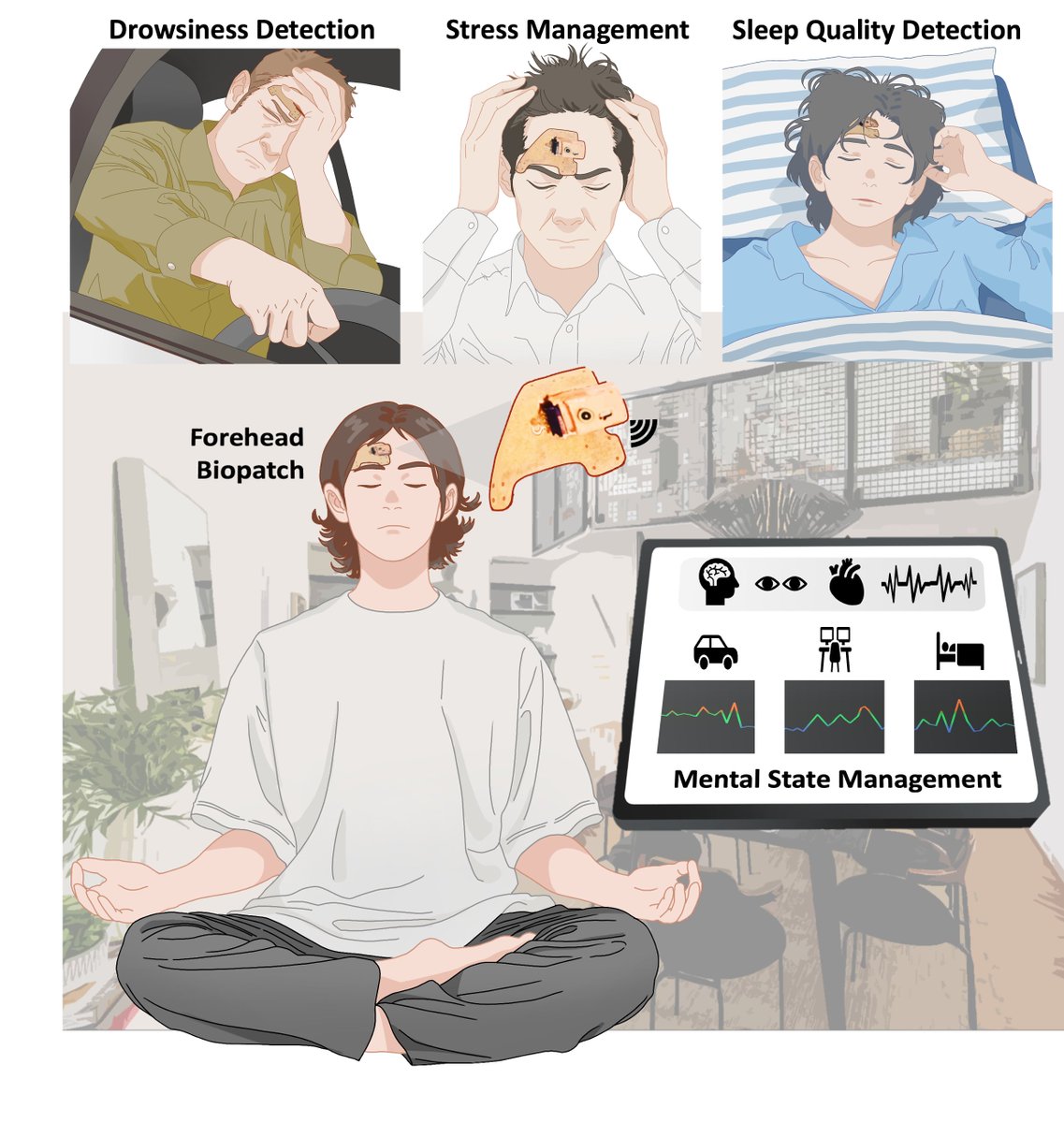
Excited to share our recent paper published in Biosensors and Bioelectronics, showing a wireless, soft, multifunctional bioelectronic system that enables continuous, real-time detection and management of various mental states🧠💓 sciencedirect.com/science/articl…

We’re celebrating a century of discovery, innovation, and impact at Stanford Engineering. Join us at engineering100.stanford.edu.

24x7 for 2047 #PhirEkBaarModiSarkar

Contemporary design. A phenomenal new hybrid powertrain. Intelligent onboard technology. Discover the new #ContinentalGT Speed at the link in our bio, or go to orlandobentley.com | #Bentley #Orlando


Save the Date! 📅 Join us for a hybrid #BHLDay2025 on 9 April as part of our 2025 Annual Meeting! Hosted by BHL Member Museum für Naturkunde Berlin, the symposium will explore the theme of Bridging Data and Nature: Connecting Information, Technology, and Biodiversity.


Researchers develop an odor-sensing bio-hybrid drone by integrating robotic technology with biological odor sensors from insects. #research #university @ShinshuUni #drone #silkworm #Robotics #technology #sensory 👉shinshu-u.ac.jp/english/topics…


At the frontier of biotech innovation, synthetic biology promises revolutionary advancements in agriculture, health, medicine, and energy. Read the 2025 Stanford Emerging Technology Review (SETR) by the @HooverInst and @StanfordEng to learn more: stanford.io/4imqHe7

Bharat Biotech International Ltd (BBIL) has inaugurated India’s first vertically integrated Cell & Gene Therapy (C>) & Viral Vector Production facility in Genome Valley with a $75M investment. #BharatBiotech #GenomeValley #Hyderabad


We’re hiring an Intern in Robotic Systems Test Engineering. Work hands-on with robots & test real-world automation. Develop Python/C++ tests & simulations. You are a Master’s student in Robotics, CS, or Engineering. Your chance for impact! Apply now careers.abb/global/en/job/…

Our March 2025 issue is out! We dive into the origin of life on Earth, honour Women’s Day with scientist profiles and stories, and some campus stories on student entrepreneurs, alumni romances, and more. 🔗 bit.ly/4hlawN3 Cover art: @RaviJambhekar #ConnectwithIISc


In the next #Paraspar series, Prof Peggy Mohan will talk about “In search of ‘Language X’: reconstruction of an Indus Valley language” 🏛Venue: Faculty Hall, Main Building, IISc 📅Date: 24 March 2025 (Monday) ⏲Time: 4 pm All are welcome


Scientists achieve a major breakthrough in artificial photosynthesis | Rebecca Shavit, Brighter Side of News Scientists achieve a breakthrough in artificial photosynthesis, mimicking nature’s energy transfer to harness solar power efficiently. Photosynthesis is one of nature’s most efficient chemical processes, converting sunlight into energy with remarkable precision. Plants use this process to create sugar molecules and oxygen from water and carbon dioxide, sustaining life on Earth. For decades, scientists have sought to mimic this natural mechanism, hoping to create artificial photosynthesis that could reduce atmospheric carbon dioxide and generate renewable energy. A new breakthrough has brought this vision closer to reality. A Blueprint from Nature Natural photosynthesis relies on pigment-protein complexes that convert solar energy into electrochemical potential. Long-distance electron transfer (ET) minimizes charge recombination, ensuring long-lived charge-separated states and high quantum efficiencies. Researchers studying artificial photosynthesis have long aimed to replicate this energy conversion process. Since the 1980s, scientists have worked to understand how electrons move between donor and acceptor molecules in synthetic systems. They have explored pathways that allow for efficient charge transfer, including those using π-conjugated spacers, DNA base pairs, and peptides. Understanding the conditions under which charge moves most efficiently—whether through direct electron tunneling or stepwise hopping—has been a central challenge in the field. A Game-Changing Discovery A recent study led by chemist Frank Würthner from Julius-Maximilians-Universität (JMU) Würzburg, in collaboration with Professor Dongho Kim’s group at Yonsei University in South Korea, has made significant progress in this area. Published in Nature Chemistry, their research introduces a new synthetic dye stack that closely mimics the structure of photosynthetic reaction centers in plants. Using four perylene bisimide (PBI) molecules stacked in a precise arrangement, the researchers developed a system capable of absorbing light at one end, separating charge carriers, and transporting them step by step to the other end. This stacked structure efficiently moves energy in a manner similar to natural photosynthesis. “We can specifically trigger the charge transport in this structure with light and have analyzed it in detail. It is efficient and fast. This is an important step towards the development of artificial photosynthesis,” said JMU PhD student Leander Ernst, who synthesized the stacked structure. Why Perylene Bisimide Matters Perylene bisimide dyes have drawn attention due to their thermal and chemical stability, as well as their high absorption efficiency in the visible spectrum. Unlike conventional molecular dimers, these dyes can be arranged into aggregates that prevent energy loss, allowing for unique properties such as singlet fission and symmetry-breaking charge separation. By engineering the molecular orientation of these stacks, researchers have achieved structures that avoid undesired exciton loss channels. This precise control over chromophore orientation ensures that energy remains efficiently transferred through the system. For this study, Würthner’s team designed donor-bridge-acceptor (D–B–A) arrays with weak inter-PBI coupling. This setup reduces charge recombination and enables the formation of long-lived excitons, a crucial factor for harvesting solar energy. In polar solvents, the system demonstrated efficient electron transfer, moving charges along the π-stacked PBI units with an attenuation factor (β) of just 0.2 Å−1. However, in non-polar solvents, the charge remained trapped, highlighting the importance of environmental conditions in optimizing charge transport. Towards the Future of Solar Energy The next step in the research is to expand these nanosystems beyond four stacked components, creating supramolecular wires that can transport energy over longer distances. If successful, these systems could be integrated into future solar energy technologies. Artificial photosynthesis holds the potential to revolutionize energy production by generating clean fuel from sunlight. By mimicking the efficiency of nature’s energy conversion process, researchers are paving the way for sustainable energy solutions. Read more: thebrighterside.news/post/scientist…


MIT engineers show that enhancing salt marshes in front of seawalls is a cost-effective way to protect our coastlines. mitsha.re/WNCx50VmnqV
🚀Intel RealSense is heading to #ISCWest2025 🚀 Explore why the award-winning Intel RealSense ID F450/F455 offers top-tier NIST-verified accuracy, performance, and security. 👉 Visit Booth #32099 🎟️ Get a Free Pass bit.ly/4hbFJlB #Accesscontol #Biometrics #AIVision


Ahmed Nienow @AhmedNieno84157
83 Followers 4K Following
Plauwun @Plauwun15223
71 Followers 1K Following

EV10 @EV10Mobility
185 Followers 2K Following Green & sustainable mobility , Ev s , Autonomous vehicles, Drones, Views personnel ..RT s are not endorsement..

Hellenic Cyber Securi... @ECSCGR
701 Followers 143 Following We are the Hellenic Cyber Security team. The team that will compete in the European Cyber Security Challenge with the top of 10 cyber security talents in Greece
IDUN Technologies - E... @IDUNTech
1K Followers 2K Following We connect every brain to the internet via in-ear EEG Hearables, and turn brain signals into cognitive & emotional insights in real-time #neurotech #BCI
NeuroTechLDN @NeuroTechLDN
2K Followers 873 Following The #London chapter of @NeuroTechX, the global #neurotechnology community Follow us for the latest news, events and opportunities in #neurotech #BCI #neuro
Abby Holland @holland_neuro
2K Followers 3K Following builder & yapper | neurotech gal fixing women's health | systems thinking about longevity, neurotech, ai | sci-fi lover

Emilė Radytė, PhD @radytee
91 Followers 215 Following neuroscientist (@harvard / @oxford) building brain-first tech for women @samphireneuro
Muse @ChooseMuse
14K Followers 4K Following Unlocking the brain, revolutionizing health 🧠⚡️ Boasting the world’s largest mobile EEG database and trusted by 200+ research institutions.
IMDEA Nanociencia �... @imdeanano
5K Followers 560 Following Institute for Research on Nanoscience of @ComunidadMadrid. Non-profit IMDEA Foundation. 'Severo Ochoa' Excellence. #IMDEAnanoPublications #IMDEAnanoSeminars
Max Planck Institute ... @mpi_msp
875 Followers 249 Following The MPI of MSP has substantial experimental & theoretical research programs that focus on novel materials with useful functionalities. #mpimsp #science
ESB 2026 @ESB_2026
2K Followers 510 Following 35th Conference of the European Society for Biomaterials
RSCbiomatchem @RSCbiomatchem
199 Followers 124 Following The Royal Society of Chemistry Biomaterials Chemistry Special Interest Group. Join us also on LinkedIn.

Jožef Stefan Institu... @JSI_SLO
1K Followers 155 Following
Chemical & Pharmaceut... @DSCF_UniTS
273 Followers 356 Following Follow for latest news, student info, and research items and events. List of our researchers & research groups: https://t.co/AaT1tB0lAY
Università di Triest... @UniTrieste
10K Followers 625 Following University of Trieste - Official account. News, info, updates on research, dissemination and teaching.
Delius Lab 🇪🇺�... @mvdelius
5K Followers 809 Following Supramolecular chemistry, dynamic covalent networks and functional materials
S. J. George's Suprac... @georgelabJNCASR
4K Followers 514 Following Twitter handle of Prof. Subi J. George's Supramolecular Chemistry Group @ JNCASR, Bangalore, India
Nazario Martín Group @nazariolab
2K Followers 114 Following Research group of Prof. Nazario Martin. Investigating organic molecular materials at Universidad Complutense de Madrid and IMDEA Nanociencia
Dipartimento di Scien... @discunipd
900 Followers 196 Following Dipartimento di Scienze Chimiche dell'Università di Padova: scoprire, apprendere, collaborare. Department of Chemical Sciences - University of Padua
3d-alchemy @3dAlchemy
987 Followers 985 Following Professional 3D Printing for Designers, Engineers and Creatives from 3D-Alchemy™. Choose from a wide range of materials and processes for your project.
Tuan TRANPHAM @ttranpham
5K Followers 3K Following 3D Printing Evangelist last 23+ years working for 9 OEMs: ZCorp, 3D Systems, Objet, Stratasys, Arcam/GE, Desktop Metal, Arevo, Azul3D and Anisoprint/FibreSeek.
RAPID + TCT Event @RAPID_Event
8K Followers 2K Following North America's largest and most influential Additive Manufacturing event.
Additive Manufacturin... @AMResearch_
2K Followers 592 Following Smart #Industry #Analysis for the #3DPrinting and Advanced #Manufacturing Industries
CREALITY CLOUD #3DPri... @CrealityCloud
10K Followers 125 Following The world's first all-in-one 3D printing platform that offers model downloads, cloud slicing and remote control printers to make 3D printing easier and smarter!

3D printing @3dprinting
16K Followers 17K Following Winner as co-driver of @EVtrophy. 🇳🇱Dutch daydreamer skating tru 🇷🇴Romania's Carpathian Garden.Amazed about 3DPrinting.Big fan of @Shapeways
European Research Cou... @ERC_Research
156K Followers 530 Following European Research Council, set up by the EU, funds top researchers of any nationality, helping them pursue ideas at the frontiers of knowledge. 🦋https://t.co/Y9s8R2t8Qr.
Corbion Biomaterials @resorbable
800 Followers 64 Following Developing, manufacturing and global marketing of resorbable polymers for medical and pharmaceutical applications.
Biomaterials Science @BioMaterSci
7K Followers 330 Following This account has been archived. Stay connected with us on https://t.co/iyvpmmCshi, LinkedIn, Bluesky, Facebook, Instagram, WeChat, YouTube and TikTok.
Superstructures Lab @MarchesanLab
2K Followers 328 Following #supramolecular #chemistry, #nanomaterials, #nanotechnology, #biomaterials, #peptides, #chirality, #science, #selfassembly, #composites, #gels. Own views.
Carbon Bionanotechnol... @LabCarbon
768 Followers 364 Following Prof. Maurizio Prato's Group at @CICbiomaGUNE. Developing carbon-based interfaces for biosensing and diagnostics. #carbonnanotubes #graphene #2Dmaterials #dots
Rockley Photonics @RockleyPhotonic
2K Followers 1K Following Transforming personal health and well-being with photonics-driven #biomarker #sensing and AI-driven health insights. #medical #biosensing #photonics
BioSensingTech @BioSensingTech
462 Followers 223 Following Institute of Bio-Sensing Technology (IBST) works with industry and researchers to create multidisciplinary partnerships to develop novel bio-sensing technology.
Conor Russomanno @ConorRussomanno
5K Followers 1K Following Founder & CEO @OpenBCI Currently building https://t.co/DBewyyin84
Rafael Malach Lab @MalachLab
707 Followers 126 Following
Axel Cleeremans @axelcleeremans
3K Followers 950 Following Brain, minds, & consciousness. Also interested in design, visual arts, biology, space, typography, and anticipation. Also known as “Axel from Belgium”.
Anil Seth @anilkseth
60K Followers 936 Following Neuroscientist: consciousness, perception, & dreamachines. TED speaker, & author: Being You - A New Science of Consciousness.
IEEE Brain @IEEEBrain
9K Followers 2K Following An #IEEE technical community facilitating cross-disciplinary collaboration to advance research, standardization & development of #neuroscience technologies.
OpenBCI @OpenBCI
20K Followers 2K Following Open source tools for neuroscience since 2014. Makers of the OpenBCI biosensing boards (EEG, EMG, ECG), the @Ultracortex, and @Galea_XR. https://t.co/zXfZswNdSD
BCI Society @BciSociety
4K Followers 54 Following
NeuroTechX @NeuroTechX
9K Followers 2K Following The International #Neurotechnology Network. From Hackers to Experts. Impacting the world of #neurotech with a bottom-up initiative. Join us!
Synchron @synchroninc
7K Followers 293 Following Building brain computer interface technology to restore, extend and protect human agency in an age of accelerating intelligence.
g.tec medical enginee... @gtec_BCI
3K Followers 78 Following Brain-Computer Interface & Neurotechnology
Smart Brain Implants @BrainImplants
4 Followers 3 Following
Georgia Tech College ... @gatechengineers
17K Followers 2K Following News and notes from the College of Engineering at @georgiatech. #HelluvaEngineer
Institute for Bioengi... @ibbgatech
2K Followers 428 Following An incubator for tackling complex research problems by bringing together engineers, scientists, and clinicians to turn discoveries into life-changing solutions.
Coulter BME | Emory &... @CoulterBME
2K Followers 354 Following Official account of the The Wallace H. Coulter Department of Biomedical Engineering at @GeorgiaTech and @EmoryUniversity.You might like