exploraton @ExploratonApp
Lack of time, knowledge or other stories do not allow you to check the project you are interested in? Check us out!! earth Joined June 2024-
Tweets368
-
Followers91
-
Following575
-
Likes205
Capital efficiency – the holy grail of on-chain finance In DeFi, yield is visible. Risk is partially visible. But the real game is hidden: capital efficiency. 🧵👇 Capital efficiency measures one thing: How much output you get from each unit of capital. Not just APY - but how effectively capital is used across the system. Early DeFi was massively inefficient. Examples: • overcollateralized loans (150–300%) • idle liquidity in AMMs • fragmented capital across chains • unused collateral sitting in wallets Safe - but wasteful. Why does inefficiency exist? Because trust is minimized. Without identity or credit systems, protocols require excess collateral to manage risk. Efficiency is sacrificed for security. The evolution of DeFi is a constant push to fix this. Each innovation tries to unlock more value from the same capital base. 1. Concentrated liquidity Instead of spreading liquidity across all prices, capital is focused where trading actually happens. Result: • deeper liquidity • higher fee generation • less idle capital 2. Rehypothecation (and its risks) Collateral gets reused across protocols: • deposit → borrow • borrow → LP • LP → stake One unit of capital supports multiple positions. Efficient — but fragile. 3. Cross-margin systems Instead of isolated positions, users share collateral across trades. Benefits: • lower capital requirements • better capital utilization • fewer liquidations But also tighter coupling of risk. 4. Liquid staking & restaking Assets like ETH can be: • staked • used as collateral • deployed in DeFi Same capital, multiple roles. This is efficiency at scale - and a new layer of systemic risk. 5. Intent-based and automated capital allocation Protocols increasingly route capital dynamically: • to highest yield • lowest risk • best execution Capital becomes fluid, not static. But efficiency has a dark side. The more optimized the system becomes: • the more interconnected it gets • the faster contagion spreads • the harder it is to unwind positions Efficiency and fragility grow together. This is the core trade-off: unused capital vs systemic risk Too conservative: • low returns • slow growth Too efficient: • hidden leverage • cascading failures The next frontier is risk-aware efficiency. Not just maximizing yield - but optimizing for: • liquidity depth • drawdown resilience • correlation stress • oracle robustness Institutions entering DeFi care about this deeply. They don’t chase max APY. They ask: • how efficiently is capital deployed? • what are the tail risks? • how fast can positions unwind? The endgame? Capital that is: • always productive • dynamically allocated • transparently risk-priced • composable across systems Without breaking under stress. Capital efficiency isn’t just a metric. It’s the foundation of scalable on-chain finance. And the protocols that master it will define the next phase of DeFi.

Blockchains are transparent. But raw blockchain data is almost unusable. 🧵👇 Every transaction, event, and state change is recorded on-chain. But try building a modern app directly from node queries and you’ll quickly hit limits: • slow reads • complex parsing • no structured search • poor historical querying Blockchains are great at writing data. They’re terrible at serving it. That’s where indexing comes in. Indexers: • extract blockchain data • structure it • make it queryable • deliver it through APIs Without indexing, most dApps simply wouldn’t function. Today, much of crypto relies on centralized indexing services. That’s convenient - but fragile. If a major indexer: • censors data • changes pricing • goes offline Entire ecosystems feel it instantly. This creates a hidden dependency. The protocol may be decentralized. The data access layer often isn’t. That’s a structural risk. Decentralized indexing networks aim to fix this. They distribute: • data extraction • query serving • validation • rewards Across independent node operators. The goal: make data access as trustless as settlement. Why this matters: dApps depend on fast, reliable data for: • portfolio tracking • governance dashboards • DeFi analytics • NFT metadata • social feeds • gaming state Without robust indexing, UX collapses. Decentralized indexers also introduce incentives. Node operators: • stake tokens • earn query fees • get slashed for bad data • compete on performance Data accuracy becomes economically enforced. But decentralizing indexing isn’t trivial. Challenges include: • data consistency across nodes • latency vs decentralization trade-offs • storage costs • query complexity • spam resistance Serving data is harder than storing it. There’s also a performance tension. Centralized providers can optimize aggressively. Decentralized networks must balance: • redundancy • verifiability • speed • cost Too slow, and developers go back to Web2 APIs. The long-term vision is bigger than dashboards. Decentralized indexing enables: • censorship-resistant front-ends • cross-chain composability • verifiable analytics • AI agents consuming on-chain data • fully decentralized app stacks It’s foundational infrastructure. Think of blockchains as settlement layers. Indexers are the search engines of Web3. Without them, users can’t navigate the ecosystem. The next generation of dApps won’t just be decentralized at the contract layer. They’ll be decentralized across: • execution • data availability • sequencing • indexing • front-end hosting True end-to-end resilience. Decentralized indexing isn’t flashy. But it’s critical. Because in Web3, who controls the data layer controls the experience.

Decentralized lobbying - can DAOs influence lawmaking? Lobbying isn’t new. What’s new is doing it on-chain. 🧵👇 For decades, corporations and interest groups have influenced policy through: • funding • advocacy • research • political networks Mostly behind closed doors. DAOs introduce a different model: transparent, collective political coordination. What is decentralized lobbying? A DAO that: • pools capital • funds policy research • coordinates public comments • supports legal challenges • backs aligned candidates or initiatives All governed on-chain. In theory, it’s powerful. Instead of a handful of executives deciding strategy, Thousands of token holders vote on: • which bills to support • which amendments to oppose • how funds are allocated • what messaging to amplify Political coordination becomes programmable. This could level the playing field. Crypto-native communities can: • respond quickly to regulation • fund expert analysis • coordinate global advocacy • mobilize grassroots campaigns Not as fragmented voices - but as capital-backed networks. Transparency is the key difference. On-chain governance means: • funding flows are visible • votes are auditable • treasury usage is trackable Compare that to traditional lobbying disclosures. But scaling influence isn’t simple. Regulatory friction is real: • political donation laws • campaign finance restrictions • foreign participation rules • securities implications A global DAO influencing a national government raises legal complexity. There’s also a governance problem. Who truly controls the DAO? • token whales? • founders? • legal wrapper boards? If governance concentrates, decentralization becomes optics. Another risk: coordination vs chaos. Political strategy requires: • coherent messaging • timing discipline • legal expertise • long-term consistency Token-holder democracy can fragment priorities. Hybrid models are emerging. DAO + legal entity structures that: • translate on-chain votes into legal action • hire professional policy advisors • comply with jurisdictional limits Code alone can’t navigate legislatures. The deeper question: Should political influence be tokenized? On one hand: • democratized funding • open coordination • borderless advocacy On the other: • plutocracy via token accumulation • governance capture • regulatory backlash Decentralized lobbying won’t replace traditional influence. But it will likely become: • faster • more transparent • more globally coordinated • and harder to ignore Especially in crypto regulation. DAOs were built to govern protocols. The next frontier? Governing narratives. Shaping frameworks. Influencing law itself. The real shift isn’t lobbying. It’s programmable political capital.

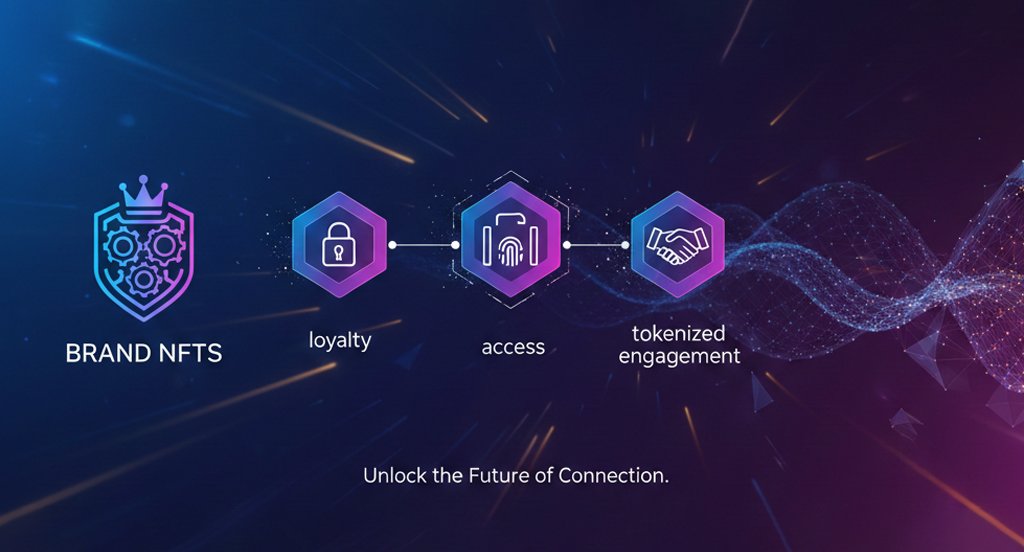
Brand NFTs – loyalty, access, and tokenized engagement Most brand NFTs failed. But not because the idea was wrong. 🧵👇 Because they were treated as collectibles - instead of infrastructure. The first wave of brand NFTs focused on: • hype drops • limited digital art • speculative resale • short-term attention That’s marketing. Not strategy. The real opportunity lies elsewhere: NFTs as programmable loyalty layers. Not JPEGs. Not speculation. But access, identity, and engagement. Imagine loyalty points - but on-chain. Instead of closed databases, brands issue: • token-gated perks • transferable memberships • proof-of-attendance NFTs • on-chain reward tiers Loyalty becomes composable. Traditional loyalty programs suffer from: • zero interoperability • expiration rules • limited resale • siloed ecosystems NFTs turn loyalty into an asset. Users can hold it. Move it. Prove it. Access is the real killer feature. Brand NFTs can unlock: • private sales • early product drops • VIP events • gated communities • digital + physical perks Ownership becomes a key. This shifts the relationship model. Instead of: Brand → Campaign → Consumer We get: Brand ↔ Token ↔ Community Persistent, programmable engagement. Tokenized engagement also introduces data advantages. On-chain behavior reveals: • engagement depth • wallet tenure • cross-brand overlap • secondary market interest Without relying entirely on Web2 platforms. But there are risks. • regulatory classification • speculative distortion • wallet friction • unclear value proposition If users only buy to flip, the brand loses control of narrative. The strongest models avoid speculation. They focus on: • utility over rarity • long-term access over quick profit • identity over trading volume The NFT is a membership layer - not a lottery ticket. Luxury brands, sports clubs, gaming ecosystems are already experimenting here. Not with hype drops, but with tokenized ecosystems. The NFT becomes a relationship anchor. The real shift? From renting attention to owning community infrastructure. Brand NFTs aren’t about art. They’re about turning engagement into programmable equity. In Web3, loyalty isn’t points in a database. It’s a wallet-level asset. And whoever designs that layer best wins long term.
Gasless transactions - UX revolution or centralization trap? Gas fees are one of crypto’s worst onboarding experiences. So what if users never had to see them? 🧵👇 Gasless transactions promise a simple idea: users interact with blockchain apps without holding native tokens or worrying about fees. For mainstream adoption, that sounds like magic. How does “gasless” actually work? Someone still pays. Most systems rely on: • relayers • meta-transactions • paymasters • sponsored gas models Fees don’t disappear - they’re abstracted. From a UX perspective, this is huge. Gasless flows enable: • one-click onboarding • Web2-like signups • mobile-friendly apps • embedded wallets • frictionless NFTs and gaming This is how non-crypto users expect software to work. Account abstraction (ERC-4337) accelerates this trend. Smart wallets can: • batch transactions • sponsor gas conditionally • pay fees in stablecoins • apply custom logic per user UX becomes programmable. But abstraction has a cost. Gasless models introduce new power centers: • relayer operators • paymaster providers • app-level gatekeepers If they go down - or censor - your transaction never reaches the chain. This creates soft centralization. Not at the protocol level - but at the transaction routing layer. The chain is decentralized. The path to it might not be. There’s also an economic risk. When users don’t see fees: • spam becomes cheaper • abuse increases • sustainability depends on subsidies Free transactions are never truly free. Someone pays - forever or until funding runs out. Privacy trade-offs matter too. Relayers can observe: • user behavior • app usage patterns • transaction timing Gasless UX can quietly expand the surveillance surface. The real question isn’t “gas or no gas”. It’s who controls the abstraction layer. Healthy designs: • support multiple relayers • allow user-paid fallback • keep permissionless exits • make costs transparent UX should hide complexity - not sovereignty. Gasless transactions are inevitable. Without them, mass adoption stalls. But if poorly designed, they risk rebuilding Web2 on top of Web3 rails. The future isn’t gasless. It’s choice-full: • abstracted when you want convenience • explicit when you want control Good UX empowers users. Bad UX replaces them. If you want next: • gas sponsorship economics • ERC-4337 security pitfalls • relayer decentralization models • UX metrics that actually drive adoption

Jurisdiction arbitrage – the new race for crypto regulation Crypto isn’t just a technological battle. It’s a regulatory one. 🧵👇 Jurisdiction arbitrage happens when companies, DAOs, and founders choose where to operate based on the most favorable legal environment. In crypto, this isn’t an edge case - it’s a survival strategy. Why? Because crypto is: • borderless by design • mobile by default • code-based rather than location-based Regulation, on the other hand, is territorial. That mismatch creates arbitrage. We’re already seeing it play out. Projects relocate to: • Dubai for regulatory clarity • Singapore for licensing pathways • Switzerland for legal recognition of tokens • Cayman Islands for DAO structuring • Europe for MiCA certainty Capital follows clarity. This creates a race between jurisdictions. Some compete by: • offering clear frameworks • fast licensing processes • sandbox environments • tax incentives • legal recognition of DAOs and tokens Others compete by enforcement - and lose talent. MiCA in Europe is a turning point. For the first time: • stablecoins • exchanges • custodians • issuers operate under a single framework. This reduces regulatory uncertainty - but also raises compliance costs. The U.S. takes a different path. • fragmented oversight • regulation by enforcement • unclear token classification This pushes startups offshore without stopping crypto activity itself. Innovation doesn’t disappear. It moves. Jurisdiction arbitrage also reshapes DeFi. Protocols design around: • governance decentralization • non-custodial architecture • “no-entity” front ends • DAO legal wrappers Not to avoid regulation - but to survive legal ambiguity. But there’s a limit to arbitrage. As global coordination increases: • AML standards converge • stablecoin rules align • travel rules expand Pure regulatory escape becomes harder. The game shifts from avoidance to optimization. The winners won’t be the loosest regulators. They’ll be the ones offering: • clear rules • predictable enforcement • innovation-friendly compliance • long-term policy stability Crypto doesn’t need no rules. It needs knowable rules. Jurisdiction arbitrage isn’t going away. It’s forcing governments to compete - not on control, but on competence. In crypto, regulation isn’t just law. It’s infrastructure.

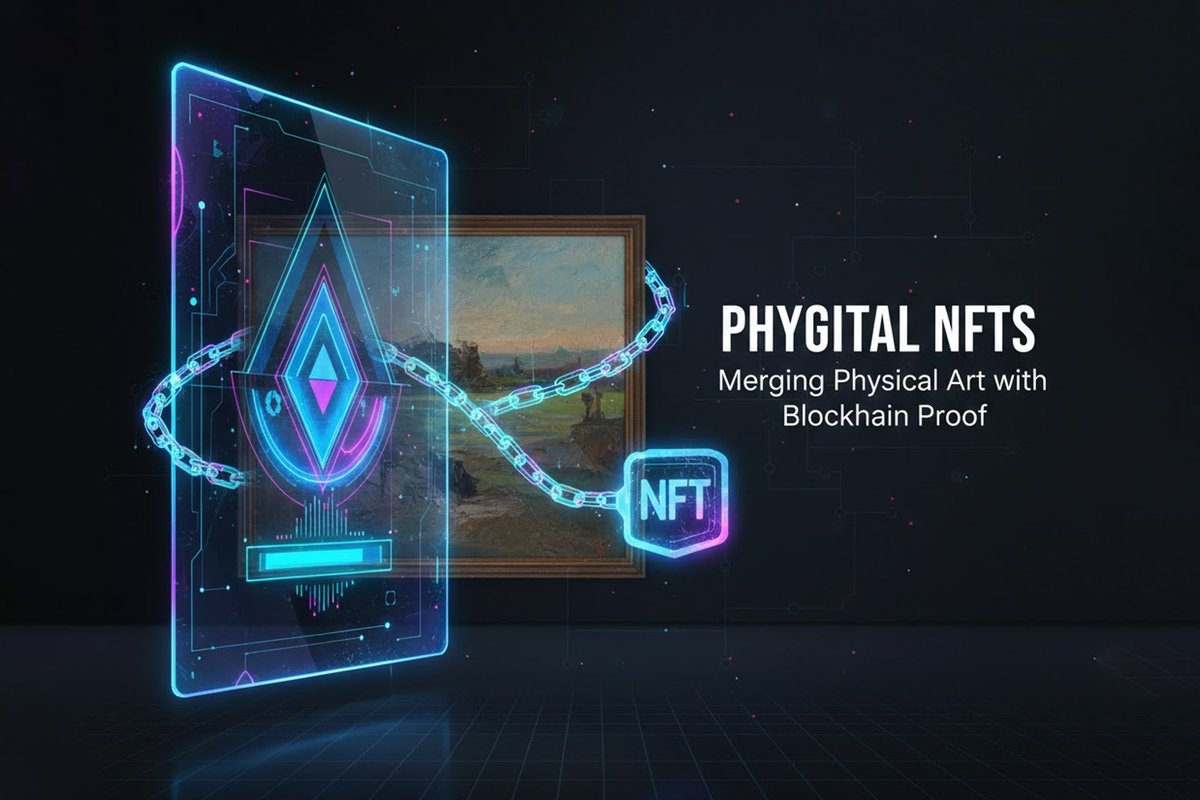
Phygital NFTs - merging physical art with blockchain proof NFTs were born digital. But art lives in the physical world. Phygital NFTs try to connect both. 🧵👇 At their core, phygital NFTs link a physical object to an on-chain certificate of authenticity. The NFT doesn’t replace the artwork. It proves what it is, who owns it, and where it’s been. This solves a long-standing problem in art markets: trust. • provenance is fragmented • authenticity relies on intermediaries • ownership records are opaque • forgeries scale faster than verification Blockchain offers a shared, tamper-resistant ledger. In a phygital model: • the physical artwork exists off-chain • the NFT acts as a digital twin • ownership transfers are on-chain • history becomes verifiable in real time Collectors don’t just buy art - they buy certainty. How are physical items linked to NFTs? Common methods include: • NFC chips embedded in artworks • QR codes with cryptographic signatures • tamper-proof seals • serial numbers mapped on-chain The link must be harder to fake than the art itself. Phygital NFTs also unlock new economic models. Artists can: • earn royalties on secondary sales • issue limited physical editions • bundle experiences with ownership • retain direct relationships with collectors This shifts power away from galleries and brokers. For collectors, benefits go beyond ownership. NFTs enable: • instant resale without paperwork • collateralization of physical art • fractional ownership models • cross-border liquidity Art becomes more liquid - without losing its material presence. But challenges remain. • custody disputes (who holds the physical piece?) • enforcement of off-chain rights • damage or loss of the physical object • legal recognition of NFT ownership Blockchain can record truth - not enforce it. There’s also a cultural tension. Some collectors value: • exclusivity • opacity • gatekeeping Phygital NFTs introduce transparency - and not everyone wants that. Still, the trend is clear. Museums, luxury brands, and artists are experimenting with phygital models. Not to replace physical art - but to future-proof it. Phygital NFTs aren’t about making art digital. They’re about making ownership verifiable, transferable, and programmable. In a world of copies, proof becomes the real asset.
Automated vaults - can AI really optimize DeFi strategies? DeFi promised permissionless yield. Automated vaults promised set-and-forget returns. Now AI enters the picture. Is this the next evolution - or just smarter wrappers? 🧵👇 Automated vaults already play a major role in DeFi. They: • rebalance positions • compound rewards • route capital across protocols • abstract complexity for users In short: they automate strategy execution. Traditional vault logic is rule-based. “If APY drops → move funds.” “If rewards accrue → compound.” “If thresholds break → rebalance.” Effective - but static. Markets aren’t. This is where AI claims an edge. AI-driven vaults aim to: • adapt strategies dynamically • react to volatility, liquidity, and flows • optimize timing, not just allocation • reduce human bias and latency In theory, this means smarter yield. But what does “AI” actually mean in DeFi? Not sentient agents. Mostly: • machine learning models • predictive analytics • pattern recognition on on-chain data • probabilistic risk scoring It’s optimization, not magic. The biggest advantage AI brings is risk management. Yield isn’t just APY - it’s survival. AI can: • detect rising liquidation risk • anticipate drawdowns • reduce exposure before stress events • dynamically size positions This matters more than chasing peak returns. However, AI vaults introduce new risks. • model opacity (black boxes) • overfitting to historical data • dependency on off-chain computation • oracle and data integrity risk Automation reduces effort - not responsibility. Another issue: market reflexivity. If many vaults use similar models, they may: • crowd into the same strategies • exit simultaneously • amplify volatility AI doesn’t remove herd behavior - it can accelerate it. So are AI vaults superior? Sometimes. They excel when: • markets are complex • conditions change rapidly • humans react too slowly But in extreme events, simple rules often outperform complex models. The future likely isn’t AI replacing DeFi strategy. It’s AI augmenting it. Best-in-class vaults will combine: • transparent logic • adaptive optimization • human oversight • conservative risk constraints AI can optimize execution. But it can’t eliminate risk. In DeFi, the real alpha isn’t intelligence - it’s discipline. Automation helps. Judgment still matters.

Bitcoin as collateral – the new foundation for DeFi? Bitcoin was designed as money. But increasingly, it’s being used as capital. 🧵👇 For years, DeFi revolved around ETH. Why? • smart contracts • native programmability • composability BTC stayed mostly passive - held, not deployed. That’s changing. Bitcoin is the largest, most liquid asset in crypto. Yet over 99% of BTC sits idle. From a capital efficiency perspective, that’s trillions of dollars doing nothing. Using BTC as collateral unlocks: • borrowing without selling • yield generation • access to DeFi without ETH exposure This reframes Bitcoin from “digital gold” to “productive reserve asset”. The challenge? Bitcoin isn’t programmable. So BTC-based DeFi relies on abstractions: • wrapped BTC (WBTC) • synthetic BTC • BTC-backed bridges • trust-minimized custody models Each adds trade-offs. Wrapped BTC dominates today. It’s liquid and widely accepted - but introduces custodial and counterparty risk. Your collateral is only as safe as the entity holding the keys. New models aim to reduce trust. Examples include: • decentralized custody • proof-of-reserves • MPC-based bridges • Bitcoin-native smart contract layers The goal: make BTC usable without sacrificing sovereignty. Why does BTC collateral matter so much? Because collateral defines DeFi’s foundation. ETH-backed systems are reflexive: • ETH secures DeFi • DeFi demand supports ETH price BTC-backed DeFi

MEV protection - fair ordering in a trustless world MEV isn’t a bug. It’s a consequence of transparency. But when value extraction becomes predatory, the question shifts from who can extract to what is fair. 🧵👇 Maximal Extractable Value exists because: • transactions are public before execution • block space is scarce • ordering determines outcomes In DeFi, ordering is power. MEV shows up as: • front-running • sandwich attacks • back-running • liquidation sniping For users, it feels like an invisible tax. Retail traders don’t see it. But they pay it - in worse prices, higher slippage, failed txs. MEV quietly transfers value from users → bots → validators. The irony? DeFi promised neutral, trustless execution. MEV breaks that promise by turning mempools into battlegrounds where speed > fairness. So how do we protect users without reintroducing trust? That’s the core challenge. One approach: private order flow. Transactions bypass the public mempool and go directly to builders or relays. Pros: • reduced sandwiching • better execution Cons: • censorship risk • opaque routing • centralization pressure Another path: fair ordering protocols. Examples include: • first-come-first-served ordering • batch auctions • time-based sequencing Goal: remove profit from reordering itself. Batch auctions are powerful. By executing many trades at once: • ordering becomes irrelevant • MEV opportunities shrink • price impact is shared fairly But UX trade-offs remain. Then there’s encrypted mempools. Transactions stay hidden until ordering is finalized. This protects users - but complicates validation and liveness. Longer-term, intent-based architectures change the game. Users express what they want: “Swap X for best price” Not how it’s executed. Solvers compete to deliver outcomes - MEV becomes optimization, not exploitation. The key insight: MEV doesn’t disappear. It gets redirected. The real question is: Who captures it? • bots? • validators? • protocols? • users? A fair system doesn’t eliminate MEV. It: • minimizes harmful extraction • internalizes value for users • makes ordering rules explicit Trustless doesn’t mean chaotic. It means rules are enforced by code - not speed, capital, or insider access. MEV protection is infrastructure, not a feature. And fair ordering may define whether DeFi scales beyond power users. In the end: The future of MEV isn’t suppression. It’s alignment.

Tax transparency on-chain – privacy vs accountability Blockchains are radically transparent. Taxes are fundamentally invasive. When these two collide, the real debate begins. 🧵👇 On-chain finance makes every transaction auditable. In theory, this is a regulator’s dream. In practice, it raises a hard question: Should financial transparency be universal - or selective? Tax authorities want: • verifiable income • traceable capital gains • real-time compliance Users want: • privacy • safety • autonomy These goals aren’t naturally aligned. On-chain transparency already enables de facto tax surveillance. Wallet clustering, analytics tools, and exchange data can reconstruct financial lives without consent. The line between compliance and mass monitoring is thin. But full privacy creates another problem. If everything is opaque: • tax evasion scales • bad actors hide easily • trust in public systems erodes Accountability still matters. The real solution isn’t more transparency or absolute privacy. It’s programmable disclosure. Zero-knowledge proofs change the equation. They allow users to: • prove income thresholds • verify tax payments • confirm compliance - without revealing every transaction. Imagine filing taxes like this: “I earned more than X” “I paid Y in taxes” “I didn’t exceed Z gains” All verified cryptographically. No raw transaction history exposed. This flips the model. Instead of: “Show us everything” It becomes: “Prove what matters” Privacy by default. Accountability by design. DAOs and on-chain treasuries push this further. Who pays tax? • contributors? • token holders? • protocol itself? Transparency doesn’t equal clarity. Without smart disclosure layers: • DAOs over-report • users under-report • regulators guess None of this scales. The future of tax compliance isn’t off-chain reporting. It’s on-chain proofs + off-chain rules. Cryptography becomes the interface between citizens and the state. The real question isn’t: “Can governments see everything?” It’s: “How little do they need to see - to trust the system?” Tax transparency on-chain isn’t a binary choice. It’s a design challenge. And Web3 has the tools to get it right - if we choose nuance over extremes.

Digital identity in the metaverse - owning your avatar In Web2, your digital identity is rented. In the metaverse, it should be owned. But what does “owning your avatar” actually mean in Web3? 🧵👇 In today’s online worlds, your avatar is platform property. If a game shuts down, bans your account, or changes its rules - your identity disappears. True digital identity means persistence beyond platforms. In Web3, an avatar can be: • a wallet-linked NFT • a bundle of on-chain traits • a portable identity across virtual worlds Ownership isn’t cosmetic - it’s cryptographic. An owned avatar means: • you control access • you decide where it appears • you carry reputation with you Identity becomes user-centric, not platform-centric. This shifts power dramatically. Platforms stop being identity gatekeepers and become venues competing for your presence. Just like websites compete for traffic - metaverses will compete for identities. But identity isn’t just visuals. A real digital identity includes: • social graph • transaction history • achievements • credentials • reputation signals Your avatar becomes your digital passport. This unlocks powerful use cases: • universal logins • portable social status • cross-game economies • metaverse-native careers • trust without intermediaries Identity becomes infrastructure. However, ownership brings new risks. If identity is tied to a wallet: • privacy becomes fragile • mistakes become permanent • key loss = identity loss Self-sovereignty cuts both ways. That’s why the future is modular identity: • separate visual layer • selective disclosure (ZK proofs) • revocable permissions • social recovery Not everything should be public - or permanent. The biggest challenge isn’t tech. It’s coordination. For avatars to be truly owned: • standards must emerge • platforms must integrate • incentives must align Without interoperability, ownership is cosmetic. The metaverse won’t be defined by graphics. It will be defined by who owns the identity layer. And the platforms that respect user-owned avatars will be the ones that survive. Owning your avatar isn’t about pixels. It’s about owning who you are online. And that may be the most valuable asset in the metaverse. 🚀 If you want, I can also: • shorten this into a viral hook version • add 2 smart hashtags optimized for X • adapt it to a more bullish / more critical tone • turn it into a carousel or visual thread concept Just say the word 👍


Dynamic Liquidity Provisioning – Smarter AMMs or Overengineering? Liquidity provisioning used to be simple. You deposited two tokens into an AMM pool. You earned fees. You accepted impermanent loss. Then markets became faster, more volatile, and more competitive. Today, static liquidity no longer fits dynamic markets - and that’s where dynamic liquidity provisioning enters the picture. But is it the next evolution of AMMs… or just complexity layered on top of an already fragile system? Let’s break it down. 1. What is dynamic liquidity provisioning? Dynamic liquidity provisioning refers to AMM designs where liquidity parameters adapt automatically based on market conditions. Instead of “set and forget” pools, liquidity can adjust: - price ranges - fee tiers - capital allocation - rebalancing frequency - exposure to volatility All without (or with minimal) human intervention. Think: - Concentrated liquidity that moves with price - Fees that rise during volatility - Capital reallocated toward active trading zones - Automated LP strategies baked into the protocol In short: liquidity that thinks. 2. Why static AMMs started to break Classic AMMs (like early Uniswap v2) assumed: - stable volatility - long-term LPs - passive behavior - simple market dynamics Reality proved otherwise. Problems emerged: ❌ Capital inefficiency ❌ High impermanent loss during trends ❌ LPs subsidizing arbitrageurs ❌ Retail LPs underperforming bots ❌ Liquidity fleeing during volatility spikes Markets move faster than static pools can react. Dynamic liquidity is a response to that mismatch. 3. How dynamic AMMs try to solve the problem Different designs tackle different pain points: 🔹 Concentrated liquidity Capital focuses where trading actually happens — not across infinite price ranges. 🔹 Volatility-based fee models Higher fees during volatile periods compensate LPs for increased risk. 🔹 Automated rebalancing Liquidity shifts as price moves, reducing manual management. 🔹 Strategy abstraction Protocols bundle complex LP strategies into simple positions for users. 🔹 AI- or oracle-driven adjustments Some systems adjust parameters using market signals, not fixed rules. The goal is simple: 👉 Higher capital efficiency 👉 Better LP returns 👉 Less leakage to arbitrage 4. Where complexity becomes a risk Dynamic systems aren’t free lunches. They introduce new challenges: ⚠️ More attack surface Complex logic increases the risk of bugs and exploits. ⚠️ Oracle dependencies Bad data = bad liquidity decisions. ⚠️ Black-box behavior LPs may not fully understand what their capital is doing. ⚠️ Strategy crowding If everyone runs the same “optimal” strategy, edges disappear. ⚠️ Operational risk Automation can fail at the worst possible moment. In DeFi, complexity often trades simplicity for fragility. 5. Who benefits most from dynamic liquidity? Not everyone equally. Best fit: - Professional LPs - DAOs managing treasury liquidity - Protocol-owned liquidity - High-volume trading pairs - Stable or semi-correlated assets Less ideal for: - Small retail LPs - Long-tail assets - Highly speculative tokens - Users seeking passive simplicity Dynamic liquidity shines where scale and data exist. 6. Overengineering or necessary evolution? The key question isn’t whether dynamic liquidity is better. It’s where it makes sense. Static AMMs are: - robust - easy to reason about - censorship-resistant - predictable Dynamic AMMs are: - capital efficient - performance-driven - automation-heavy - harder to audit and understand The future likely isn’t one or the other. It’s layered liquidity: - simple pools for resilience - dynamic pools for efficiency - abstractions that hide complexity from users 7. The bigger picture: AMMs as market infrastructure AMMs are no longer experiments. They’re becoming: - global trading rails - on-chain FX markets - liquidity backbones for RWAs - settlement layers for institutions As capital scales, inefficient liquidity becomes too expensive. Dynamic provisioning isn’t overengineering - it’s an attempt to match financial reality. But only if: - security keeps up - transparency improves - risk is clearly communicated - users retain control Conclusion: Smarter liquidity, not blind automation Dynamic liquidity provisioning is a powerful tool - not a universal solution. Used carefully: ✅ better LP returns ✅ deeper liquidity ✅ more resilient markets Used blindly: ❌ hidden risks ❌ systemic fragility ❌ capital misallocation The real innovation isn’t automation itself - it’s designing systems that adapt without breaking trust. That’s the challenge AMMs must solve next.

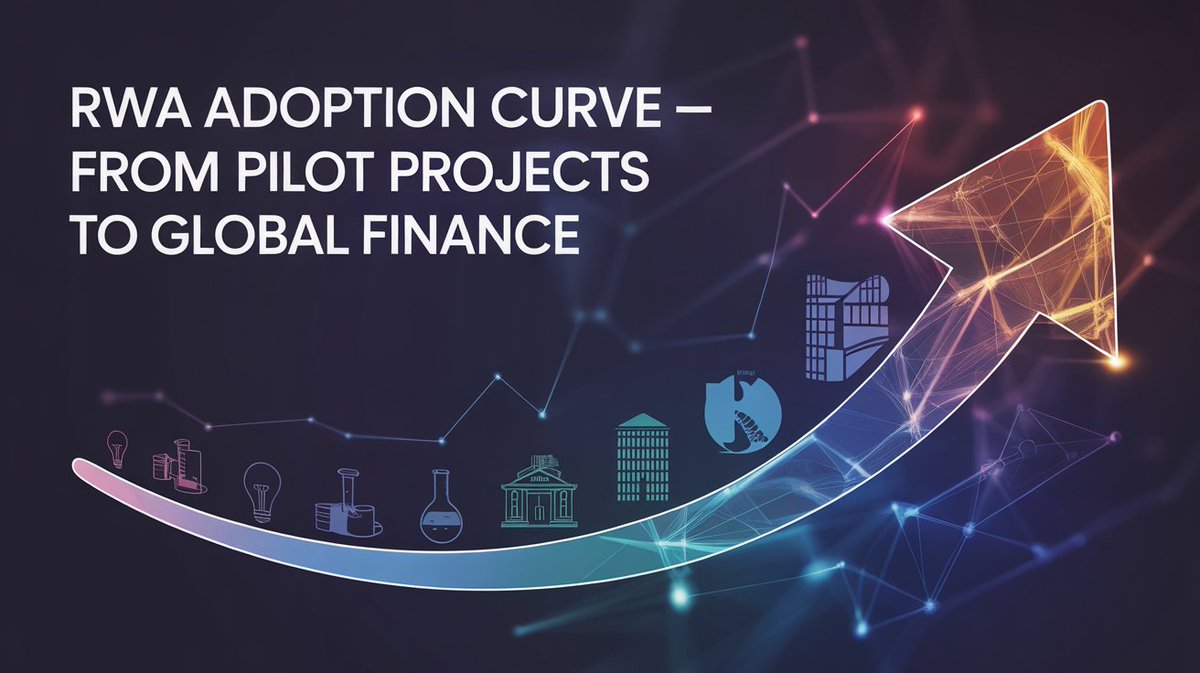
RWA Adoption Curve - From Pilot Projects to Global Finance Real-world assets (RWAs) are quietly becoming one of the most important bridges between traditional finance and DeFi. Tokenized treasuries. On-chain real estate. Private credit funds settling on Ethereum. What once sounded experimental is now attracting governments, banks, asset managers, and regulators. But RWA adoption doesn’t happen overnight. It follows a clear curve - and we’re only partway through it. Let’s break down where we are, what comes next, and why RWAs could reshape global finance. 1. Phase One: Pilot Projects & Proof of Concept The first wave of RWA adoption was about experimentation, not scale. Key characteristics: - Limited asset size - Closed user groups - Heavy compliance controls - Manual off-chain processes Examples: - Tokenized government bonds - Real estate shares on private blockchains - Permissioned DeFi lending pools - On-chain settlement of TradFi instruments The goal wasn’t efficiency - it was validation: 👉 Can blockchain legally represent real assets? 👉 Can on-chain settlement reduce friction? This phase proved one thing clearly: the tech works. 2. Phase Two: Institutional On-Chain Finance This is where we are today. Large institutions are no longer “testing blockchain” - they’re deploying capital. What changed? - Clearer regulatory frameworks - Better custody solutions - Audited smart contracts - Token standards for RWAs - Familiar yield profiles (T-bills, credit, money markets) Institutions prefer RWAs because: - They generate real yield, not inflationary rewards - They reduce settlement times from days to minutes - They offer transparency without losing control - They plug directly into DeFi liquidity This phase blends: 🏦 TradFi trust ⛓️ On-chain efficiency And it’s accelerating fast. 3. Phase Three: DeFi-Native Financialization Once RWAs exist on-chain, they don’t stay static. They become programmable money legos. New use cases emerge: - RWA-backed stablecoins - Tokenized treasuries as DeFi collateral - On-chain credit markets - Structured products built from real assets - Yield-bearing tokens composable across protocols This is the moment where: RWAs stop being “bridges” and become core DeFi infrastructure. The line between TradFi and DeFi starts to blur. 4. Phase Four: Global Access & Financial Inclusion The real breakthrough happens when RWAs move beyond institutions. Imagine: - Anyone holding tokenized US treasuries - Global access to stable yield - Real estate exposure without local banks - On-chain compliance replacing intermediaries - Fractional ownership at internet scale For emerging markets, this is transformative: - Access to global assets - Protection against local inflation - Faster settlement - Fewer gatekeepers At this stage, RWAs aren’t just financial products - they become public financial infrastructure. 5. What’s Slowing Adoption? RWAs face real challenges: ⚠️ Legal enforceability across jurisdictions ⚠️ Custody and oracle risks ⚠️ Regulatory fragmentation ⚠️ KYC/AML integration ⚠️ Standardization across chains But none of these are unsolved problems. In fact, each year brings: - clearer laws - better tooling - more institutional participation The curve is steepening. 6. Why RWAs May Be Crypto’s Biggest Narrative RWAs solve crypto’s biggest criticisms: - “No real value” → real cash flows - “Too volatile” → stable yield - “Speculative only” → productive capital - “Disconnected from reality” → legally enforceable assets They also unlock: - trillions in TradFi liquidity - sustainable DeFi economics - regulatory legitimacy - long-term adoption beyond cycles RWAs don’t replace DeFi ideals - they anchor them in the real economy. Conclusion: From Experiments to Global Rails The RWA adoption curve is clear: 1️⃣ Pilot experiments 2️⃣ Institutional deployment 3️⃣ DeFi-native composability 4️⃣ Global financial access We’re currently between phases 2 and 3. That’s the inflection point. If crypto is going to scale beyond speculation, RWAs are one of the most realistic paths forward. The question is no longer if RWAs go mainstream - but who builds the rails first.
Intent-Based Architectures – When Transactions Meet AI For years, blockchains have forced users to think like machines: Pick the right gas. Choose the right route. Select the right chain. Sign the right transaction. One wrong click - and funds are gone. But a new paradigm is emerging that flips this model upside down: Users express intent (“I want to swap this token for the best price”), and the network figures out how to execute it. This shift - from transaction-based to intent-based architectures - is one of the most important evolutions happening across Web3. And when you combine it with AI, it becomes transformative. Let’s break down why. 1. What is an “intent” in Web3? A transaction says: 👉 Execute this exact action in this exact way. An intent says: 👉 Here’s what I want. You (the solver) figure out the best path. It’s like the difference between: - manually flying a plane vs - telling the autopilot your destination. Intent systems let users define outcomes instead of steps. Examples: - “Swap 1 ETH for USDC at the best possible price.” - “Bridge my assets to the cheapest L2.” - “Stake this capital to maximize real yield.” - “Mint the NFT at the lowest slippage and highest success probability.” Solvers - off-chain agents - compete to find the most efficient execution route. This model already powers ecosystems like Anoma, CowSwap, Essential, Flashbots SUAVE, and Polygon’s AggLayer. But the next phase is even bigger. 2. Why intent-based systems matter 🟩 1. They unlock better UX Users stop dealing with L1 vs L2, bridges, relayers, slippage, mempools, MEV. They simply request an outcome. 🟩 2. They reduce failed transactions Solvers optimize routing and gas usage. 🟩 3. They create market-driven execution Different solvers compete, creating: - better prices - better protection - better reliability 🟩 4. They align incentives Solvers get rewarded for delivering optimal outcomes - not for extracting MEV from users. 🟩 5. They allow for new economic primitives Intent bonds, solver reputation markets, solver auctions - all become possible. 3. Where AI enters the picture This is the part few people are truly ready for: Intent architectures + AI make blockchains self-optimizing. AI can: 🤖 Analyze intents Infer user goals, adjust constraints, and prevent harmful actions (e.g., accidental approvals, scam contracts, high-risk pools). 🤖 Build execution strategies Instead of simple routing, AI can heuristically search for: - minimal gas paths - best cross-chain routes - optimal staking mixes - maximum-yield allocations - MEV-immune strategies 🤖 Act as solvers themselves Agentic AI systems can submit solutions, compete in solver markets, and continuously improve from feedback. 🤖 Personalize execution per user Risk appetite, preferred chains, liquidity sensitivity - AI agents can tailor actions automatically. This means the future of blockchains isn’t just “smart contracts.” It’s smart agents acting on behalf of users. 4. The new risks: when autonomy meets money Intent-based systems introduce new challenges: ⚠️ 1. Solver collusion Solvers could coordinate to deliver worse execution prices. ⚠️ 2. AI hallucinations If an AI solver misinterprets intents, it may choose risky or suboptimal paths. ⚠️ 3. Delegated authority Users must trust off-chain actors not to misbehave. ⚠️ 4. Increased attack surface More actors = more vectors, from solver poisoning to intent spoofing. ⚠️ 5. Regulatory complexity Who is responsible for an autonomous solver’s decision? The benefits are huge, but the architecture must be carefully designed. 5. The endgame: autonomous financial operating systems Intent-based architectures transform blockchains from manual execution to AI-assisted automation. The future user experience looks like this: - “Optimize my portfolio for stable yield.” - “Convert 10% of my income into BTC every month.” - “Move my liquidity to where gas is lowest.” - “Execute this strategy across chains securely.” And an AI agent handles: - routing - bridging - swapping - staking - risk analysis - timing - execution Seamlessly, trustlessly, and across the entire modular ecosystem. This is the true abstraction of blockchains: Users stop caring about chains, liquidity paths, or transactions - they only care about outcomes. Conclusion: Intents are the foundation of AI-native blockchains Intent-based architectures are not just another infrastructure trend. They are a complete redesign of how users interact with decentralized systems. They shift us from: ❌ low-level execution to ✅ high-level goals ❌ manual steps to ✅ autonomous optimization ❌ human micro-management to ✅ AI-driven inference and execution As AI agents mature, intents become the universal interface of Web3 - the moment when blockchains stop feeling like developer tools and start feeling like intelligent financial platforms.

Tonhook!!! Only now, LIMITED TIME OFFER! Register 👇🏻 exploraton.store/?ref=maciekdom… #WebhookNotifications #TelegramIntegration #RealTimeUpdates #DashboardManagement Zobacz tłumaczenie
Smart Contract Auditing Standards – Who Sets the Rules? Smart contract audits are treated like the ultimate stamp of safety. Founders brag about them. VCs demand them. Users trust them. Yet here’s the uncomfortable truth: - There is no global standard for smart contract auditing. - No unified methodology. - No governing body. - No baseline definition of what an audit must include. The industry is running on trust, reputation, and a patchwork of practices created by private firms. And as DeFi scales toward real institutional adoption, this lack of standardization is becoming one of the biggest systemic risks in Web3. Let’s break down why. 1. Auditing today: a fragmented landscape Every major auditor - Trail of Bits, OpenZeppelin, Sherlock, Spearbit, CertiK, Zellic, Halborn - uses its own process: - different threat models - different severity scoring - different remediation requirements - different disclosure policies - different documentation formats Two audits for the same codebase can look completely different. There is no objective benchmark for what a “good audit” means. This fragmentation leads to the core problem: security outcomes depend more on the auditor than the code. 2. Why the lack of standards is a structural risk Smart contracts are infrastructure. They run money, governance, derivatives, liquidity, collateralization, on-chain identity - everything. But without standardization: 🧨 1. “Audited” becomes a marketing term, not a security guarantee Founders can shop for the easiest auditor, not the best one. 🧨 2. Multichain protocols break consistency A contract safe on Ethereum might use assumptions totally invalid on Solana, Base, Arbitrum, or a Cosmos chain. 🧨 3. Institutional adoption stalls Institutions want frameworks - SOC 2, ISO 27001, PCI DSS. DeFi has none. 🧨 4. Exploits exploit the differences between auditors If one firm overlooks a niche attack vector, an attacker only needs to find the weakest link. 3. Who’s trying to define the rules? There are early attempts - but nothing universal. 🔹 Security firms They lead the conversation, but each pushes its own methodology. 🔹 Blockchain foundations Ethereum Foundation, Solana Foundation, Avalanche - all publish security guidelines. None are enforceable. 🔹 Insurance protocols Nexus Mutual, Sherlock, RiskDAO analyze audits to price risk, which indirectly shapes standards. 🔹 Competitions & bug bounty platforms Immunefi and Code4rena have created their own scoring frameworks. 🔹 Regulators (slowly) MiCA in Europe and SEC actions in the U.S. indirectly push for formal processes, but regulators don't yet define how audits must work. Right now, no single entity sets the rules - the market does. 4. What would a real standard look like? A mature DeFi ecosystem will likely require something closer to: ✔ A baseline threat model Reentrancy, MEV manipulations, economic attacks, oracle risks, governance attacks, cross-chain bridge assumptions. ✔ A unified severity scoring system Like CVSS for cybersecurity. ✔ Minimum requirements for audit scope Code coverage thresholds, test requirements, documentation standards. ✔ Public, standardized audit reports Transparent formats, mandatory remediations, clear evidence of fixes. ✔ Certification of auditors A crypto-native version of ISO or SOC accreditation. ✔ A red-team culture baked into the process Periodic re-audits, on-chain monitoring, economic stress tests. Auditing should be dynamic - not a one-time PDF. 5. The endgame: Security as a public good The future of Web3 security isn’t private firms competing. It’s network-level standards supported by: - security collectives - open frameworks - shared knowledge bases - on-chain reputation mechanisms - AI-assisted code verification - automated formal proofs integrated into compilers Audits will evolve from “best effort by humans” to an ecosystem of automated tools, open standards, and specialized human reviewers. Conclusion: Until standards emerge, auditing is a trust game Smart contract auditing is one of the most important pieces of Web3 infrastructure - but also one of the least standardized. Until the industry agrees on shared rules, the word “audited” will continue to mean wildly different things depending on who performed it. The question isn’t whether standards will emerge. It’s who will define them: - auditors? - chains? - DAOs? - regulators? - or the market itself? Whatever the answer, standardization is no longer optional. It’s the next big step toward making Web3 truly secure, scalable, and institution-ready.

DeFi Derivatives - The Quiet Revolution in On-Chain Hedging For years, DeFi was dominated by spot trading, yield farming, and lending. But behind the scenes, derivatives protocols have grown into the fastest-rising segment of on-chain finance. Perps, options, synthetic assets, and structured products are reshaping how traders hedge - without centralized exchanges. Let’s break down the quiet revolution happening in on-chain derivatives. 👇 1️⃣ Why DeFi derivatives matter more than ever DeFi can’t mature without hedging. Farmers, LPs, market makers, and even DAOs need tools to: - lock in yields - manage volatility - protect downside - hedge liquidity positions - manage treasury risk Centralized exchanges used to be the only option. Not anymore. On-chain derivatives now offer trustless, transparent, global hedging - 24/7. 2️⃣ Perpetual DEXs are leading the charge Perpetual futures (perps) are becoming the backbone of DeFi. Key advantages: ✔ Execution on-chain No custodial risk. No FTX-style blowups. ✔ Real-time transparency Funding rates, open interest, and liquidity visible to everyone. ✔ Composability Strategies plug directly into vaults, DEXs, lending platforms. ✔ Permissionless access Anyone with a wallet can hedge exposure. Protocols like GMX, dYdX v4, Synthetix perps, Vertex, Hyperliquid (hybrid), and newer orderbook rollups are showing that DEXs can rival CEXs in derivatives volume. 3️⃣ Options protocols unlock advanced hedging Options used to be too complex and illiquid in DeFi. Not anymore. Modern protocols are fixing this via: - on-chain AMM options - vault-based structured products - RFQ options marketplaces - intent-based execution - delta-neutral hedged vaults - tokenized Greeks (hedging as tokens) This allows: - covered calls - protective puts - volatility plays - systematic income strategies DAOs are beginning to hedge treasury assets using on-chain options - a huge signal of maturity. 4️⃣ Synthetic derivatives connect TradFi and crypto Synthetic assets (synths) enable exposure to: - commodities - index funds - equities - forex - interest rates All on-chain, without custodial intermediaries. This unlocks: - hedging crypto positions with TradFi benchmarks - creating new risk markets - structured yield products - cross-asset arbitrage strategies As RWAs grow, synthetic markets will follow. 5️⃣ The killers: intent-based execution & oracle-free perps The next wave of derivatives innovation is already here: Intent-based execution Traders express intent (e.g., “hedge 1 ETH with delta-neutral protection”) Solvers execute the best option across multiple venues. Oracle-free designs New perps avoid oracle manipulation by using: - funding rate curves - internal price discovery - adversarial-resistant designs - vAMMs with dynamic parameters This drastically reduces the largest DeFi risk: oracle attacks. 6️⃣ Liquidity is evolving: restaking and shared sequencing Derivatives thrive on deep liquidity. Two trends are accelerating growth: Restaked capital EigenLayer-style restaking is being reused as: - collateral - insurance - margin for derivatives This creates unified liquidity across protocols. Shared sequencers (modular blockchains) Faster, fairer, low-latency execution = derivatives DEXs that finally rival CEX UX. This is where on-chain perps become competitive at scale. 7️⃣ DeFi derivatives aren’t just for traders They’re becoming essential to the entire on-chain economy: - LPs use perps to hedge impermanent loss - lenders hedge collateral exposure - yield farmers hedge volatility - DAOs hedge treasury assets - RWA issuers hedge rates and FX - market makers hedge token launch volatility As the ecosystem grows, hedging becomes a necessity - not an optional strategy. 8️⃣ The big picture: DeFi is building Wall Street in public Derivatives markets are the largest markets in the world - by far. And they’re moving on-chain faster than most people realize. What’s emerging is: - CEX-level liquidity - transparent funding mechanics - oracle-minimized systems - on-chain margining - global access - programmable hedging strategies - 24/7 markets This is not a niche. This is the future backbone of on-chain risk management. 9️⃣ The bottom line Derivatives are the missing layer that turns DeFi from experimental to institutional. The revolution is quiet because it’s technical. But its impact will be loud: - deeper liquidity - more stable markets - better risk management - more sustainable yields - professional-grade trading tools DeFi derivatives aren't just competing with CeFi - they’re redefining how hedging works in a transparent, global, programmable way.


Kolo Joshon @KJoshon80367
13 Followers 92 Following
Zen 💧 @Zen0x90
101K Followers 60K Following Tensorian #1285 🧬 Analyst | Degen | Collab Director | AMA hoster | 1.3 Mil+ Network | Caller #Nft / #Crypto Advisor 💧 @underground caller
RayNft @raynft_
341K Followers 153K Following Pudgy Penguin #3793 • Spreading Awareness in the Web3 Space • Alpha Caller & CM • Degen Crypto enjoyer #NFT 🐧 #Crypto
BNB WHALE 🐋 1000X @BNBWHALE100
15K Followers 15K Following Crypto Ethusiast • NFA • DYOR • Dm for discussions! Partner @BinanceAfrica




UnfilteredOP🔊 @Stocked_OUT
2K Followers 6K Following Straight-up opinion on trending chaos(Politics, Movies, Sports, Stock market) 🌐India + world affairs 🦹No sugarcoating 👉Just pure hot takes
Melissa @ExtussiMelissa
162 Followers 2K Following Finding inspiration in the ordinary and turning everyday moments into extraordinary experiences.
Ahmed X @AhmedRashardX
836 Followers 2K Following Student of Theology. Deliberate Dialogue Practitioner. Hard discussions establish truth, Justice. God is One (Unity Principle). Peace🤲🏾

TabithaEveline @fD4oGRslz5RJQsm
69 Followers 1K Following

DeveloperX @DeveloperX_Sec
679 Followers 429 Following Blockchain dev & auditor | Cantina Top 310 All time| building @BIFYOFFICIAL | ZK | Real Madrid ‼️ | Anime🤩 | Football |
BBCreation @BoluwatifeBlos1
521 Followers 1K Following Creative Studio for Digital Motion & Meme Branding 🎬 We animate your crypto stories, skits & visuals in 2D/3D Promos • Websites • Meme Drops . DM for Collab

Caelum Mythos @CaelumMythosNFT
139 Followers 1K Following NFT Artist | Digital Creator 🎨 Presenting CAELUM MYTHOS a celestial odyssey where ancient legends meet the blockchain $MYTH Life in Pixels #NFTs $sol
Indie Games Developer... @igdmag
20K Followers 12K Following The Original Indie Games Developer Magazine - Indie Game Showcases, development, interviews, assets, tools and marketing. #indiegame #indiegamedev #magazine
Moonsong Labs @moonsonglabs_
4K Followers 4K Following Blockchain and AI Engineering for Production-Grade Systems

JamieMarcellus @87eEU84zJ42m8S
89 Followers 2K Following

LizBuckle @6592477jwtpt4Cc
58 Followers 1K Following


HermosaTrevelyan @34GOc61T1Sy92D
63 Followers 968 Following
LeeDelia @2l7A063718YyO9
42 Followers 987 Following

Kimberly @Sleerlga07546
76 Followers 2K Following I’m not a backup plan, and definitely not your second choice.
CandiceCowper @3y76v6K2kBXaSU0
12 Followers 579 Following
業界地図ナビ @Glorsal54449
43 Followers 2K Following 【完全無料】 25年の株式投資プロチーム(運用資産500億円以上)が提供:毎日の市場分析レポート + 優良成長株のピックアップ。プロの情報を無料で。まずはお気軽にお問い合わせください。
DaisyWarner @1ekBl3Lm36F71V5
40 Followers 1K Following
Ann @64QVPT0k1wu28lF
21 Followers 851 Following
PenelopeLandon @7e8Ad9aQp91CQ
36 Followers 2K Following
SetllaPaul @Qvl3Kt5I9Ox3yui
15 Followers 541 Following

Bella @s6RBPe06S1CEK
24 Followers 849 Following Success isn’t about being the best. It’s about always getting better.

AnastasiaEveline @XgT5qQOf2WlRgo
35 Followers 1K Following
Faina @780AVw36W6e8l
34 Followers 861 Following
RaeMaurice @38L4of5ewVUnpm
54 Followers 2K Following
Valeria @8V3y8XBH8ySQTn
24 Followers 781 Following
Guinevere @Feaoumu1812063
100 Followers 2K Following You don’t have to play the game the way they wrote it.

Visionnaire Web3 @VisionnaireWeb3
236K Followers 29K Following ON MISSION TO EMPOWER 🚀➡️ COINS,NFT, CRYPTO PROJECTS & DIGITAL ART #AI #NFT #DAO ARTISTS OF THE WEEK :- , @vestn_io, @The_wolf_nft GET FEATURED

Wooqer @Wooqer2352
13 Followers 950 Following
KRYPTOWAY ®️ @kryptoway_ai
114 Followers 289 Following 🧠 Where AI meets Blockchain 🚀 Decentralized Intelligence | Web3 ⚡ Exploring the Crypto × AI revolution
kruzd @kruzd_sTONks
125 Followers 125 Following @stonksbots | sTONks Trading Bot and sTONks.pump Team | In TON we Trust 🚀💪 This is a commentery account, nothing here is financial advice.
Tom Rose @TomRoseIndy
21K Followers 843 Following A not-so-secret agent of MAGA Judeo-Christian Conspiracy
BNB WHALE 🐋 1000X @BNBWHALE100
15K Followers 15K Following Crypto Ethusiast • NFA • DYOR • Dm for discussions! Partner @BinanceAfrica
₿itcoin Cyphers @Bitcoin_Cyphers
2K Followers 234 Following X-₿lack Crypto Uncensored Market Makers Hunter TA/ Futures ------------------------------------------------------- TG: https://t.co/B1GSoA4Wie
🧩 Marek Porwol �... @MarekPorwol
10K Followers 2K Following Bitcoin and Cryptocurrency Enthusiast @HajsoHolicy YT 18k+ [email protected] TG https://t.co/ee7fSR4rTw DC https://t.co/q40XIHgQfT
📈 Tom Kowalczyk @tomkowalczyk
29K Followers 514 Following Thick face, black heart practitioner Building software, sharing knowledge, always learning ⚡#software🕵🏻#research 🔑#security
Kowalski @PortfelK
16K Followers 740 Following Blockchain Enthusiast / Youtube Influencer / Podcaster wszystko co piszę, nie jest poradą inwestycyjną. Wypowiedzi są żartem o charakrerze kabaretowym !

kyudo @kyudo_krypto
16K Followers 637 Following Entuzjasta krypto i finansów 📈 YT: https://t.co/PGIbwengxL TG: https://t.co/6KIV1J4Vgs
Atomowy 🚀 @AtomowyInwestor
3K Followers 58 Following 𝔸𝕥𝕠𝕞𝕠𝕨𝕪 𝕀𝕟𝕨𝕖𝕤𝕥𝕠𝕣 - zawodowy poszukiwacz korelacji tam gdzie ich nie ma. Pamiętnik dobrych i złych decyzji.
Oak Investor @oak_investor
22K Followers 1K Following ➡️IKE maximalist ➡️S&P500 & NASDAQ 📫[email protected] ❗️Plan na Emeryturę: https://t.co/fXHXiD7Sgs
mactom 🌶 @MaciejTomczyk3
99K Followers 2K Following CEO @KryptoEkipa @cryptoeventpl #Chiliz Alliance🌶 SOLANA Soldier 🌞 Private opinions only ☀ Współpraca/ Cooperation [email protected]
BBCreation @BoluwatifeBlos1
521 Followers 1K Following Creative Studio for Digital Motion & Meme Branding 🎬 We animate your crypto stories, skits & visuals in 2D/3D Promos • Websites • Meme Drops . DM for Collab
Duane 🇲🇹 Freela... @duanecreates
3K Followers 2K Following 👋 I design & build software for small businesses 👍 Bootstrapping SaaS startups 👉 Passionate about tech & digital business 👇 Let's connect
Jay S | App & Web Dev... @JaySuazo088
1K Followers 2K Following Helping Businesses Scale with Custom Apps & Digital Solutions | 650+ Projects Delivered | UI/UX & Web3 Advocate | Passionate About Crypto & the Future of Tech.
Ansif | Webflow Desig... @Ansif_developer
2K Followers 2K Following Helping SaaS founders & CMOs fix website bugs, boost conversions & ship updates 5× faster | Webflow Premium Partner Co-founder → https://t.co/GU39hqHNQt
Nuno Bispo (aka Devel... @DevAsService
477 Followers 631 Following Solutions Architect · Senior Python & AI Engineer · AI Audits · Helping teams fix what they shipped too fast
Declan | Rust Develop... @buildWithDeclan
2K Followers 2K Following I write smart contracts on $ICP blockchain with Rust🦀.
Peter Angelov @peterangelovx0
89 Followers 271 Following Founder @ Mirao | Infrastructure & Web3 Advisor | ex-Deutschebank Fund | $765M+ Deal Flow
HACK the Developer @HACKhalo2
431 Followers 653 Following Goofball. Tinkerer. Coder and Developer. VR fanboy. Pinball Repair Guru. A heaping pinch of insanity.
Justin @SleepyDeveloper
3K Followers 317 Following The intersection of art and engineering is my jam. #Meta #ExAmazon. 日本語ができるアメリカ人
Web3 Developer Clubs @Web3Clubs
4K Followers 788 Following Hub exploring mainstream Web3 & AI use cases + Enabling builders to pursue Web3 engineering in Africa.Solidity|Rust|Math|ProgCrypto| https://t.co/3DPO4obyYv
Benjamin R R @TheWowDeveloper
9K Followers 9K Following Founder of BRAID at https://t.co/FHQn69ze07 | CMO/CTO at my company | Consulting for Fractional CMO and CTO as content marketer | Ex-Uni Instructor | 8+ years coding


Saber.eth | Blockchai... @Sabercodes123
4K Followers 751 Following Full-Stack Blockchain Dev | Developer Relations | Exploring AI, Privacy & On-chain Systems | Prev @Hypersignchain @NFTFN | Public Speaker
Nico Anastasio⚡ Web... @anastasio_nico
340 Followers 110 Following 🚀 Get a High-Converting Website, App, or Brand that Turns Traffic into Paying Customers! 💥 Affordable Packages | ⚡ Fast Delivery
Sammyloaded | Web Dev... @Sammyloaded48
531 Followers 130 Following 🌐Web Designer | 📊Digital Marketer | 👨🏽🏫CMS Expert | 🖥️Entrepreneur |🤳Communication Specialist (Email) | ForbesBLK Member | Tech Content Creator.

Chris Vanderplank (In... @IntrepidDev1988
70 Followers 115 Following Father of two amazing boys, boldly coding through the galaxy of .NET for over a decade. 🚀
Cloud Developer @CloudCompounder
811 Followers 695 Following Christ follower. Husband and dad. CTO building cloud software. Amateur investor looking for quality companies that compound over long time periods.
Hamad — Develop... @ihamadfuad
2K Followers 330 Following I share my experiences in App Development & UI/UX. Legendary Player in Call of Duty Mobile
NatureManufacture @NatureDeveloper
1K Followers 304 Following We create professional tools and 3D assets. Shape your concept and build beautiful games and apps with our content. Check our FAB and Unity Asset Store pages.
DeveloperX @DeveloperX_Sec
679 Followers 429 Following Blockchain dev & auditor | Cantina Top 310 All time| building @BIFYOFFICIAL | ZK | Real Madrid ‼️ | Anime🤩 | Football |
Web Developer | Web D... @growpixelco
308 Followers 2K Following Developer & Automation Expert | 17 yrs in code + No-Code | Webflow, Framer, WordPress | I turn visions into smooth digital realities ⚡
Tyler @Developer65537
609 Followers 8 Following Quants Trader | IBM Quantum Developer | Toptal-Certified Full-Stack Engineer | Math Olympiad Camp | Invest, AI, Quantum, Space
gbae the app develope... @daboigbae
17K Followers 5K Following 🇲🇽 🏀 👑 the lebron james of vibe coding aka "ace" 🎳 Top 1% Upwork • $1M earned • 13k+ hours
Phil Reale @ProDeveloperFL
430 Followers 236 Following Florida Man. Family. Business. AI, Bitcoin. Crypto. GenX. CEO. Krav Maga. Physics.
ADA Holders and Block... @vinacds
584 Followers 1K Following Finance, Crypto Market News Understanding Cardano, CNT ecosystem and ADA Holders Blockchain Developer in the Cardano ecosystem
오이킴(OEKim) @oekim_developer
556 Followers 1K Following Team OGAMDO Developer https://t.co/biPLOBUgjb
WPDeveloper @WPDevTeam
69K Followers 51 Following A #WordPress Product Company, serving 6 million+ happy users from 180+ countries. We made: 🌟@EssentialAddons ☁️@xcloud_host 🤝@GoEasyJobs 🚀@templately
REDeveloperGuy @DeveloperQuirks
6K Followers 482 Following Commercial real estate development from Single Tenant to Power Centers focused on the Northeast, Southeast and Texas. 🇺🇸
Sean Doherty // CULT ... @freelancegames
3K Followers 465 Following Solo dev making narrative, small open-world games. Currently developing: CULT OF THE DERP.
Bitcoin Developers LA... @BitDevsLA
1K Followers 101 Following Home of the Los Angeles #Bitcoin socratic seminar. A developer-focused Bitcoin meetup. ⚡️
☣ junior developer ... @chromatic_x
5K Followers 239 Following the prowde spirit cannot beareth to be mocked / niche content for elite connoisseurs he/him but they/them okay
Developer Web3 Jogja @devweb3jogja
5K Followers 244 Following Helping you win a hackathon & building Web3 startup. 40 International Hackathon Winners. Join our community, link below :
Vive Developers @htcdev
20K Followers 632 Following Welcome to HTC's official developer program! Got a quick question or just want to say hello? Tweet us! #VR #htcvive

Circle Developer @BuildOnCircle
11K Followers 103 Following 🛠️Build on @Circle with @USDC innovating for an inclusive future | Join our discord for support at https://t.co/rNKdXRdgy6You might like