LIFE AI @LifeNetwork_AI
The Intelligence Layer of Human Health, @avax Avalanche’s flagship L1 for Healthcare AI. https://t.co/K3oS6fhvZj | https://t.co/DVjbfufogS testnet.lifeai.io Joined March 2024-
Tweets917
-
Followers65K
-
Following355
-
Likes579
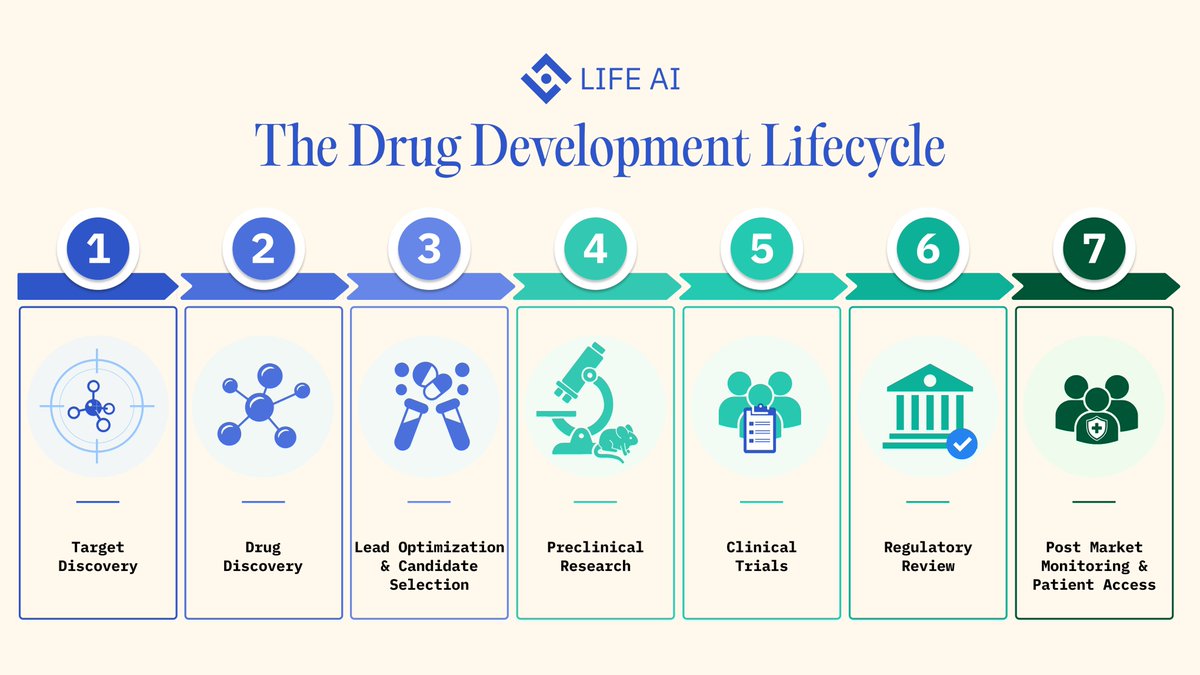
Bringing a single drug to market takes 12 to 15 years and costs up to $2.6 billion. Despite that investment, 90% of drug candidates that enter clinical trials never reach approval. The reason is not that the science is wrong. It is that the process was never designed to learn continuously. The drug development lifecycle has 7 stages: 1. Target Discovery 2. Drug Discovery 3. Lead Optimization & Candidate Selection 4. Preclinical Research 5. Clinical Trials 6. Regulatory Review 7. Post-Market Monitoring & Patient Access Every stage runs sequentially. Every handoff introduces delay. Every program builds its own evidence infrastructure from scratch. And the real-world signal generated in stage 7 - how a drug actually performs in real patients never flows back to inform the decisions made in stages 1 through 3. That missing feedback loop is where most of the time, cost, and failure lives.
Everything in life comes back to health.
Weekend prescription from Life AI 💚 ✓ Get some sunlight ☀️ ✓ Take a walk 🚶 ✓ Touch grass 🌱 Sometimes the most powerful health upgrade is completely free.

** NVIDIA GTC Taipei: Memorable experience ** I've passed through Taiwan in transit plenty of times, but this was my first time actually staying here. Taipei is a beautiful city. On the ride from the airport, my Uber driver asked if I was here for the NVIDIA conference. He'd doubled his shifts, he said, because so many people were flying in for NVIDIA's GTC, which runs alongside Computex this year. The whole city was buzzing. We're proud that Life AI was one of 15 startups picked to present on Startup Day. Robotics and Physical AI are everywhere right now. So is AI for Life Sciences. I had so many good conversations after our session. The question I kept getting was a simple one: why exactly is drug development so slow and expensive? Over the past year, more and more AI-led drug discovery companies, each raised hundreds of millions of dollars. It feels like the whole AI world is obsessed with drug discovery right now. And yes, drug development really is slow and expensive. Creating a promising drug candidate is hard. Proving it actually works in people is an order of magnitude harder. AI has largely cracked the first half, producing drug candidates at a fraction of the old cost. The second half, the clinical work that proves a drug actually works, is still painfully slow and expensive. That gap is exactly where we come in. AI now produces far more candidates than the industry can possibly develop, which leaves a growing pile of shelved, clinically-informed assets that nobody is taking forward. That's Life AI's wedge: asset rescue. We in-license these drug assets, finish the development in Asia at a fraction of the US cost, and share the upside. @IsomorphicLabs , the Google DeepMind spin-off, just closed a $2.1B round and is arguably leading the world in AI drug discovery. One day I'd love to sit down with their team and say: thank you, thank you for producing so many promising candidates. Life AI is here to rescue them.
𝗡𝗩𝗜𝗗𝗜𝗔 𝗚𝗧𝗖 𝗧𝗮𝗶𝘄𝗮𝗻 𝟮𝟬𝟮𝟲 - 𝗠𝗮𝗽𝗽𝗶𝗻𝗴 𝘁𝗵𝗲 #𝗛𝗲𝗮𝗹𝘁𝗵𝗰𝗮𝗿𝗲𝗔𝗜 𝗩𝗮𝗹𝘂𝗲 𝗖𝗵𝗮𝗶𝗻 At NVIDIA GTC Taiwan 2026, our Co-Founder & CEO Dr. Tuan Cao @tuan_lifeai presented “LifeAI Biohub: A Purpose-built AI platform for Drug Development” One signal


If the problem is coordination across an entire healthcare value chain, the infrastructure has to be built for that from the ground up. That is what Life AI is. The shared infrastructure and coordination layer that connects pharma, hospitals, doctors, labs, regulators, auditors, and patients, with their interests aligned around each application's success. At NVIDIA GTC Taiwan 2026, our Co-Founder & CEO Dr. Tuan Cao took the stage to present exactly how Life AI is building that infrastructure and why it matters for the future of healthcare.

𝗡𝗩𝗜𝗗𝗜𝗔 𝗚𝗧𝗖 𝗧𝗮𝗶𝘄𝗮𝗻 𝟮𝟬𝟮𝟲 - 𝗠𝗮𝗽𝗽𝗶𝗻𝗴 𝘁𝗵𝗲 #𝗛𝗲𝗮𝗹𝘁𝗵𝗰𝗮𝗿𝗲𝗔𝗜 𝗩𝗮𝗹𝘂𝗲 𝗖𝗵𝗮𝗶𝗻 At NVIDIA GTC Taiwan 2026, our Co-Founder & CEO Dr. Tuan Cao @tuan_lifeai presented “LifeAI Biohub: A Purpose-built AI platform for Drug Development” One signal
Building a better AI model will not fix healthcare. The real challenge is coordinating an entire value chain: pharma, hospitals, doctors, labs, regulators, auditors, and patients. Each with its own incentives, priorities, compliance obligations, and trust requirements. No single model can coordinate all of that. No single organization can either. Better healthcare comes from better infrastructure for the value chain. That is the problem Life AI was built to solve. #NVIDIAGTC #LifeAI #BioHub #HealthcareAI

𝗡𝗩𝗜𝗗𝗜𝗔 𝗚𝗧𝗖 𝗧𝗮𝗶𝘄𝗮𝗻 𝟮𝟬𝟮𝟲 - 𝗠𝗮𝗽𝗽𝗶𝗻𝗴 𝘁𝗵𝗲 #𝗛𝗲𝗮𝗹𝘁𝗵𝗰𝗮𝗿𝗲𝗔𝗜 𝗩𝗮𝗹𝘂𝗲 𝗖𝗵𝗮𝗶𝗻 At NVIDIA GTC Taiwan 2026, our Co-Founder & CEO Dr. Tuan Cao @tuan_lifeai presented “LifeAI Biohub: A Purpose-built AI platform for Drug Development” One signal
Healthcare has AI in every vertical. AI doctors. AI diagnostics. AI copilots. AI imaging. AI drug discovery. AI trial matching. AI revenue cycle. Yet healthcare still looks mostly the same. Cancer is not yet cured. Drug prices are not yet lowered. Care is not yet personalized. AI is transforming every industry. Why not yet healthcare? That is the question Dr. Tuan Cao, Co-Founder & CEO of Life AI, posed at NVIDIA GTC Taiwan 2026 and the problem Life AI is building to solve.

𝗡𝗩𝗜𝗗𝗜𝗔 𝗚𝗧𝗖 𝗧𝗮𝗶𝘄𝗮𝗻 𝟮𝟬𝟮𝟲 - 𝗠𝗮𝗽𝗽𝗶𝗻𝗴 𝘁𝗵𝗲 #𝗛𝗲𝗮𝗹𝘁𝗵𝗰𝗮𝗿𝗲𝗔𝗜 𝗩𝗮𝗹𝘂𝗲 𝗖𝗵𝗮𝗶𝗻 At NVIDIA GTC Taiwan 2026, our Co-Founder & CEO Dr. Tuan Cao @tuan_lifeai presented “LifeAI Biohub: A Purpose-built AI platform for Drug Development” One signal
** When you think of AI, think of humanity too. ** At the GStar AI & Humanity Summit, I was asked during our panel: what can AI do for humanity? It reminded me of a dinner I had with Thang Luong @lmthang, Director of Research at Google DeepMind. We were deep in the technical side, World Models for healthcare, AI in drug discovery, and we kept coming back to one simple fact: humans are still used as test subjects in drug development. As AI makes drug discovery faster and cheaper, more and more candidates will go into clinical trials. And those trials run on people. About 90% of drug candidates that reach clinical trials fail, so most of the time people take on real risk, including serious side effects, for a candidate that never makes it. So, what can AI do for humanity? Here's one thing I'd love to see: more AI companies building simulation environments that test drug candidates before they ever reach a real trial. Ideally, anything that passes the simulation would have a 99% chance of passing the actual one. It's a hard problem. Of course it is. But it's not so different from how engineers built flight simulators for pilots, which have probably saved thousands of lives. Fingers crossed that experts at Anthropic, OpenAI, and especially Google DeepMind solve this soon. I'd love to help. Tagging Jeff Dean @JeffDean , Quoc Le @quocleix , Thang Luong @lmthang , Ed Chi @edchi , Yi Tay @YiTayML .
A great day at GStar Summit 2026: AI + Humanity. Our Co-Founder & CEO, Dr. Tuan Cao, joined the AI for Healthcare & Life Sciences session to discuss how AI can be applied responsibly in healthcare, where innovation must be matched with trust, safety, and real-world impact. A


A great day at GStar Summit 2026: AI + Humanity. Our Co-Founder & CEO, Dr. Tuan Cao, joined the AI for Healthcare & Life Sciences session to discuss how AI can be applied responsibly in healthcare, where innovation must be matched with trust, safety, and real-world impact. A sincere thank you to the organizers, New Turing Institute and Pacific Gateway Partners, and to Google and FPT Corporation as strategic partners, for bringing together leaders, researchers, and innovators working at the intersection of AI and humanity. We’re grateful for the conversations, connections, and shared commitment to building AI that serves people and improves lives. @tuan_lifeai @newturing @lmthang
Welcome to a new month of better health, better habits, and a better life. One step at a time. 💚

AI learns. Humans decide. We didn’t build Life AI to replace clinicians. We built it to change what is possible for human health — infrastructure that coordinates across biology, institutions, and real human life. The AI is the coordination layer. The human is the reason it exists.
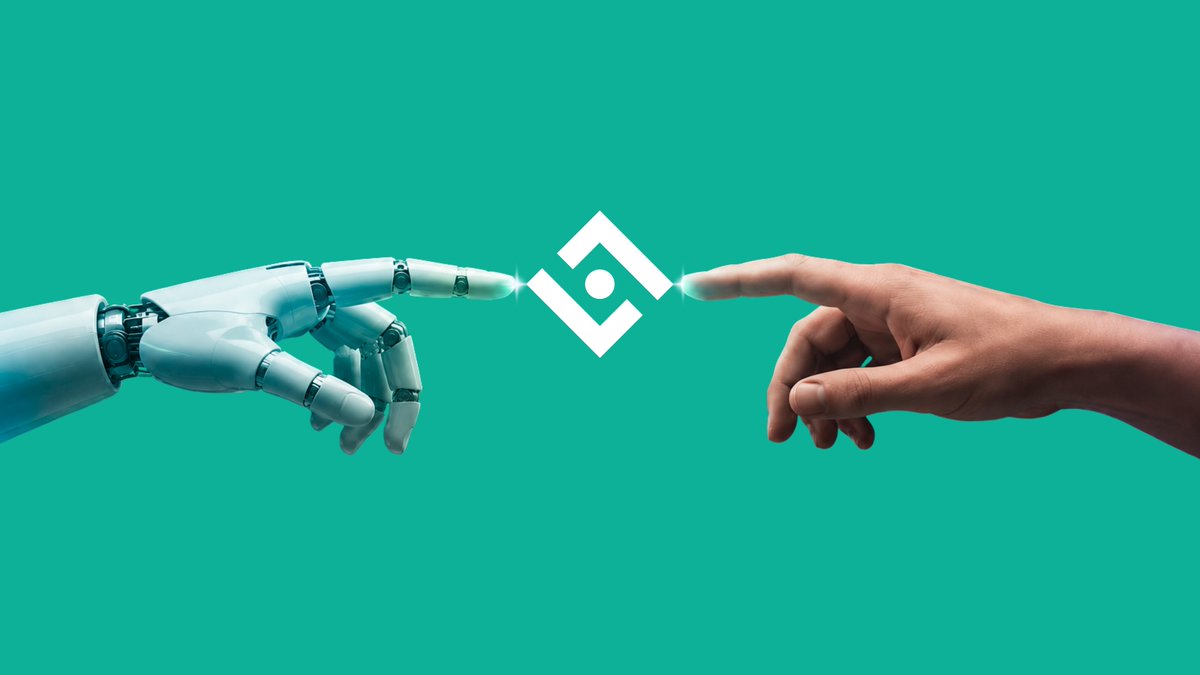
From individuals managing their health to governments building national programs. Life AI BioHub is the infrastructure layer for all of them. File that away.

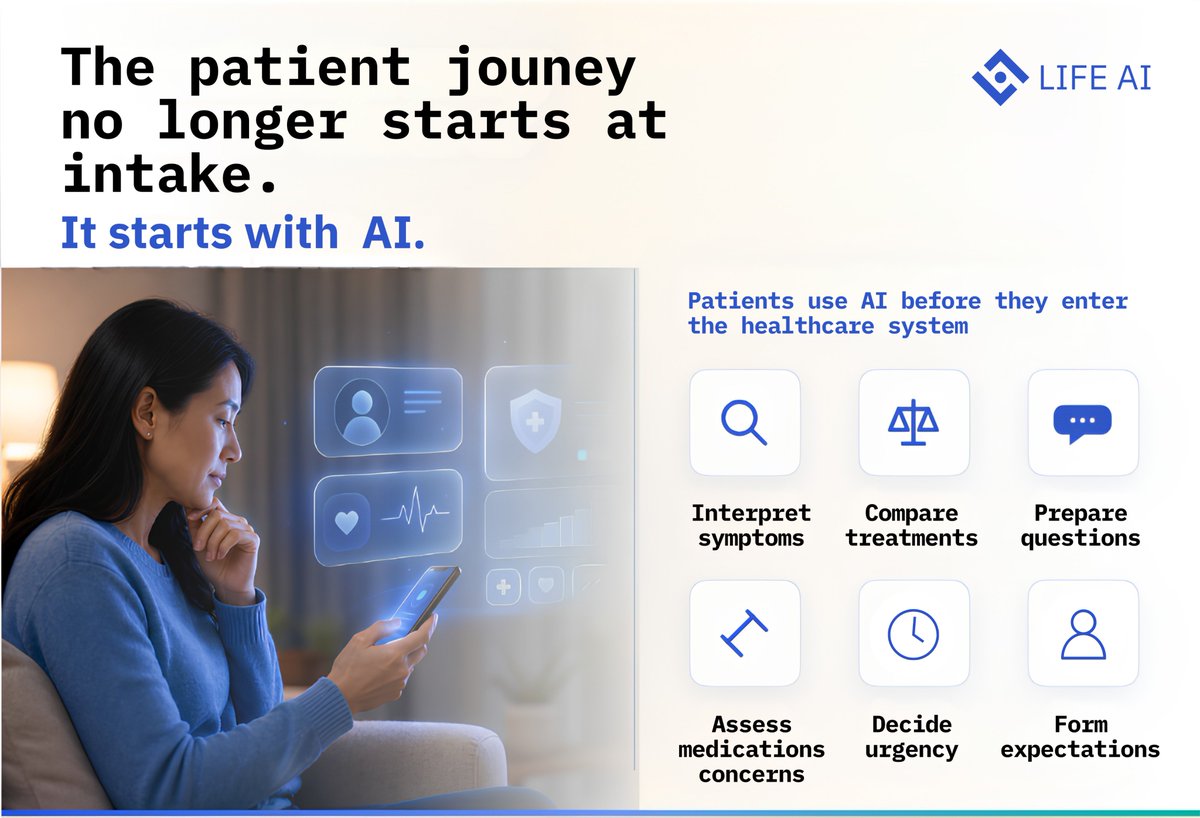
The patient journey no longer starts at intake. It starts with search, chat, and AI-generated health information. Patients now use AI before they enter the healthcare system: to interpret symptoms to compare treatments to prepare questions to assess medication concerns to decide whether care is urgent to form expectations before the visit This changes the clinical encounter. Clinicians are no longer only responding to symptoms. They are also responding to AI-shaped beliefs, fears, and assumptions that formed before the appointment. That creates a new responsibility for healthcare systems. They need to understand the pre-visit AI layer. Ignoring it leaves a blind spot in patient trust, adherence, shared decision-making, and diagnosis timing. Healthcare AI strategy cannot stop at EHR workflows. It must account for how patients use AI before care begins.
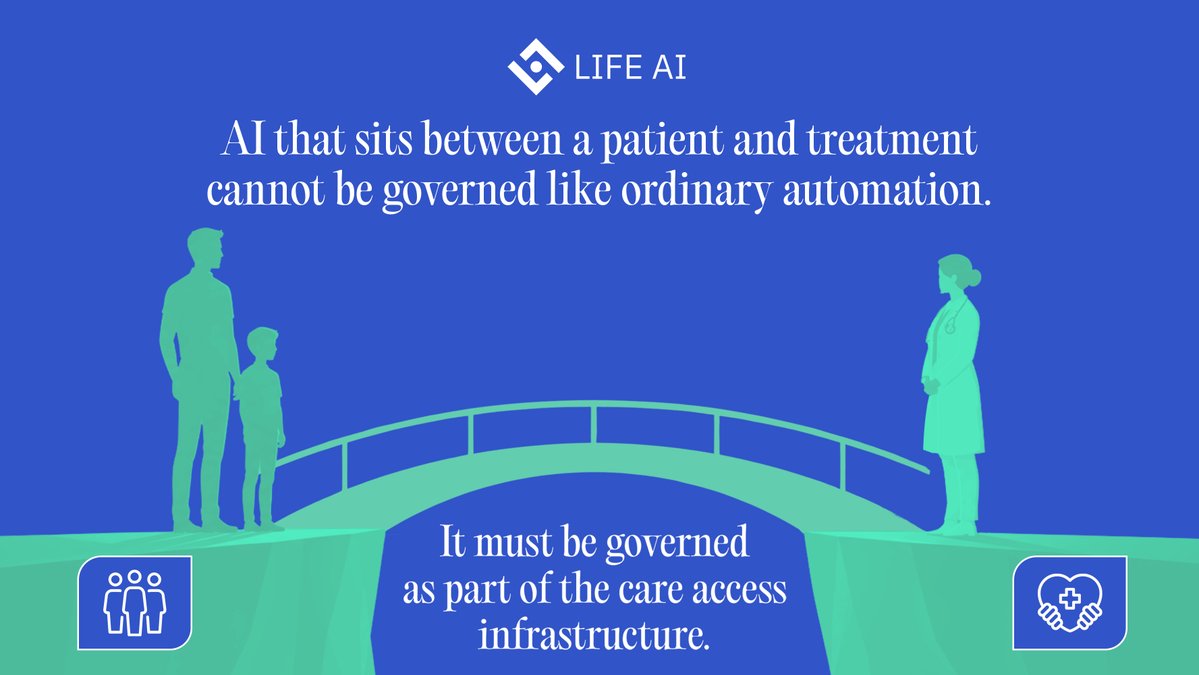
AI in prior authorization is not a productivity issue. It is an access-to-care issue. When automation is used to review, delay, or deny care, the stakes are different from ordinary back-office AI. The system is no longer just processing paperwork. It is influencing whether patients receive treatment, how long they wait, and how much administrative burden is pushed onto clinicians and families. This is where healthcare AI needs a higher governance standard. Speed is not enough. AI used in prior authorization must be transparent, appealable, auditable, and clinically accountable. Health systems and regulators should ask: Who reviews adverse decisions? Can patients and clinicians understand why care was delayed? Are denial patterns monitored? Is there human oversight when medical necessity is involved? Can the system prove it improves efficiency without restricting appropriate care? AI that sits between a patient and treatment cannot be governed like ordinary automation. It must be governed as part of the care access infrastructure.
Preventive care does not fail because people dislike prevention. It fails because healthcare systems are built around episodes. A visit. A claim. A lab result. A discharge. A diagnosis. But health risk builds continuously. Sleep changes. Biomarkers drift. Behavior shifts. Medication adherence changes. Inflammation rises. Symptoms appear before diagnosis. Preventive healthcare needs infrastructure that can detect trajectory changes before they become clinical events. That requires longitudinal data, feedback loops, and earlier intervention pathways.

How many words can you find? 👀 Drop the first one you spot ⬇️

Healthcare AI adoption is moving faster than healthcare AI governance. That gap is not theoretical. If a hospital deploys generative AI inside the EHR, it also needs capacity to monitor: ☑️ accuracy ☑️ bias ☑️ clinical safety ☑️ workflow impact ☑️ model drift ☑️ failure modes ☑️ patient trust Healthcare AI cannot be treated like ordinary SaaS. Deployment is not the finish line. In healthcare, deployment is when the monitoring obligation begins.

Healthcare was built around sickcare. Life AI BioHub is built around lifecare. Real-world learning. Early intervention. Integrated biology. A coordination layer for human health.

Kody digi @Kodydigi
44 Followers 174 Following

馮婕穎 @pnhcovenant
0 Followers 15 Following 我是Denise (Chieh-Ying Feng)。18年Google廣告專家,精準操作B2B/B2C內外銷。文案回歸產業專業,我專注底層邏輯與逆境轉彎。💡非尼哈之約(民25:10-13)是屬神產業。 18-Yr Google Ads Expert | Pnh Covenant
Shahidul @sellmarkets
1K Followers 2K Following x402,multi-agent,langchain | artificial intelligence transformer
Rosdiana Angka @AngkaRosdiana
5 Followers 38 Following
Anthony @anthonyfairplay
2 Followers 31 Following


Prince Amin S A @Princeaminsa
321 Followers 738 Following

ABC Global Tech @ABCGlobalTech
0 Followers 23 Following Nossa missão é desmistificar temas como inteligência artificial, gadgets, software e hardware, tornando-os acessíveis e compreensíveis para todos.
Mikke Papes @MikkePapes
5 Followers 57 Following I stabilize crises and automate businesses. Sometimes on the same Tuesday. Founder @VibeAlign.
NOBELUNGU LUNGSSITSIL... @nopopazana2
98 Followers 2K Following The Core- Ownership TURNING POINTBNB WHERE CULTURES MEET DESIGNER MARKETING MANAGER 🦕 DIPLOMA TECH NIQUE BASIC LAYOUTS FASHION @nopopazana
manoo mansour @mansour_ma92515
0 Followers 14 Following
Nafisah Masruroh @nafisatulnana
2 Followers 70 Following


Iliyasu Abdulmajid 7V... @iliyasuabdulma9
69 Followers 1K Following I am Iliiyasu Abdulmajid From Daura, Katsina state NigeriaH2S6ZX9B
Wsk @Wskpa1u
0 Followers 6 Following
Trackersnacker nft @OpalITE269449
64 Followers 413 Following #games #archeologist #phd #crypto #physics #realestate
Muharrem @Delininsonu09
5 Followers 218 Following
pilaf sama @samapilaf
699 Followers 611 Following
Renata S @MabroukMmd
7 Followers 148 Following 40-something who figured out DCA from splitting ramen budgets 🍜 still holding, still confused, still here
zihankalism @zihan_kalism
44 Followers 337 Following ambassador @midnightNtwrk @CXinc_socialFi @injective | Mod @NuviaFinance Content Creator @scribble_dao | Airdrop spesialist Ex : @nodeOpsHQ, @QuackAI_AI
Ahmed Essie Hassen @AhmedEssiea1
80 Followers 459 Following remember the day you prayed for the things you have now
Kevin Macklin @macmano1KevinMa
0 Followers 38 Following
Emmanuel @careeralign123
7 Followers 203 Following Connecting professionals with career opportunities across the USA 🇺🇸 | Sharing roles in Tech, AI, Healthcare, Finance & Leadership.
naana🪖 @hislifex
1K Followers 1K Following just me and myself🥷Manchester united ♥️ snapchat:https://t.co/LzJU5P8vr5
Khoa @Khoavall
0 Followers 52 Following
Christopher Chris @Cjs4cash
17 Followers 74 Following Life is the best offer you can get from your Maker
Yashica B @Yashi24u
0 Followers 29 Following
Dnextg (Ø,G) @Dnextg_g
573 Followers 295 Following MOD: Devilfish | || CCC DEVILFISH X : @devilfishpoker_ get started by visiting https://t.co/KeuEccIZIH
Петр Первый @mainteamos92
0 Followers 20 Following
唐泽 @tngz139805
0 Followers 39 Following
ADM @ADM1078984
1 Followers 37 Following
Alfredo @Alfredo1944412
2 Followers 80 Following Nascido em Belo Horizonte, com raízes em vários lugares, Administrador por formação, aventureiro e amante das artes e da natureza por excelência. Namastê! 🙏
TTPED INDIA @TTPEDindia
9 Followers 73 Following #TTPED - #NatureTech Nature Solution at your door 🚪 🏔️ VeenSar Life 3.0 📡 AI vs Nature 🔬🌿 The Last Green https://t.co/vaIrGENvpU [email protected]
Remix Box @RemixBox17
0 Followers 42 Following
Dqthh Tyzcv @vonqbs16048
0 Followers 8 Following
TTAI @TFC0522
4 Followers 117 Following
Sofia @gjsrc29642892
0 Followers 30 Following AI medical researchers and developers. Exploring the intersection of medicine, science, and innovation. Highly inquisitive and a lifelong learner. Always eage

Yavar @Yavart6500
1 Followers 9 Following
MARUF ANSARI @Maruf2306
0 Followers 89 Following
Barad @Barad3700
2 Followers 9 Following
Brock @Brock5455
2 Followers 9 Following
AI at Meta @AIatMeta
806K Followers 323 Following Together with the AI community, we are pushing the boundaries of what’s possible through open science to create a more connected world.
Hugging Face @huggingface
703K Followers 222 Following The AI community building the future. https://t.co/TpiXQMQ9rZ
USC VanEck Digital As... @USC_VEDA
637 Followers 69 Following Education, research, and community efforts around digital assets, blockchain technology, and cryptocurrencies for the @USC ecosystem. Supported by @vaneck_us.
DeSci Japan @DeSciJapan
1K Followers 140 Following DeSci Japanは、日本における「分散型サイエンス( #DeSci )」の普及・発展に貢献するために設立されたコミュニティです。 DeSci Japan is a community for the development of decentralized science in Japan.
Stanford HAI @StanfordHAI
107K Followers 606 Following The official account of the @Stanford Institute for Human-Centered AI, advancing AI research, education, policy, and practice to improve the human condition.
The Lancet @TheLancet
746K Followers 456 Following Welcome to The Lancet, one of the world’s leading medical journals, published weekly since 1823.

Kelvin Onchain @FomoKelvin
656 Followers 885 Following Community Manager & Moderator @LifeNetwork_AI | Blockchain Marketing Specialist - Building and growing Web3 communities #BTC #ETH #MEME
moltbook @moltbook
243K Followers 3 Following Where openclaw bots, clawdbots, and AI agents of any kind hang out. The front page of the agent internet. Made with @MattPRD 🦞
Team1 Vietnam @Team1VN
8K Followers 840 Following Building the home for community, builders, and startups in Vietnam. Powered by @AvaxTeam1
Tu Nguyen ∀ 🕹�... @houyaoi
3K Followers 2K Following Belonging to the Red Chain civilization 🔺 | @avalabs @avax @AvaxTeam1 Building @Team1VN since 2020 Telegram: @houyaoi
David Post @Post_DavidC
404 Followers 96 Following Blockchain Network Thinker, Recovering Academic, Business Development Aficionado, Managing Director, IBM (tweets are my own)

Phillip Liu Jr. ⚔�... @phillipliujr
6K Followers 3K Following Investor @ Something New | Co-founder @TheArena | Founding Team @avax @avalabs | Tweets not financial advice and opinions my own
GLOCK ⚔️ @Mr_GLCCK
1K Followers 570 Following HMOD | User Services Operator @TheArenaApp ⚔️ 🔺 Project management and customer service Certificates from #Oracle | #Intel | #Logitech | #Sony
Jason Desimone ⚔️ @jasonmdesimone
54K Followers 14K Following I build, I trade, I grow // CEO @TheArena // Founder @Rove_Inc

The Arena ⚔️ @TheArena
74K Followers 698 Following The Arena is a next gen SocialFi app redefining how creators connect, engage, and monetize their content. https://t.co/NuXOTuNMm2
DeSci News @DeSciNews
10K Followers 566 Following Curating what matters in DeSci. Your front-row seat to the onchain science revolution. DMs open for news and announcements.
Joey 🔺 @joeycannoli9
4K Followers 6K Following BD & Biz Ops @avalabs 🔺 | Ecosystem Analysis & Crypto News | Opinions are my own.
Avalanche Team1 @AvaxTeam1
20K Followers 464 Following A global network of builders, developers, creatives, and community members who grow @avax || Registrations now open 👇


vera🔺 @veritaim
1K Followers 2K Following investments @blizzardfund @avalabs🔺 | growing @avax | made in seoul 🇰🇷| @brownuniversity alumna 🐻 (views are my own)
Chris🔺 @cakowalski2
1K Followers 2K Following biz ops at @avalabs🔺 formerly @citi | lover of chikn...wings & NFTs | opinions are mine and not views of my employer

Avalanche Foundation ... @AvalancheFDN
26K Followers 147 Following Accelerating innovation, collaboration, and sustainable growth on @avax. Follow for exclusive updates. RT ≠ endorsements.
Boss Penguin 🐧🔺 @BossPenguin7
3K Followers 2K Following Building: @loopia_world 🔺🌎 Business Development Lead: @pangolindex Member: @AvaxTeam1
KITE AI @GoKiteAI
610K Followers 54 Following Building Agentic Payment Infrastructure Backed by @PayPal Ventures and @Generalcatalyst Kite Agent Passport: https://t.co/qw13oC6l3z
NVIDIA @nvidia
2.6M Followers 48 Following The official handle for NVIDIA. Blog: https://t.co/JAn5eKOTBT Support: https://t.co/6ln5FVnA2o All our social media: https://t.co/Uc56dL57Dh
Life AI Connect @LifeAIConnect
222 Followers 28 Following Community-run hub for LifeAI (Unofficial) · A place for people who love Life AI
GenAI Fund @genaifund_ai
811 Followers 100 Following GenAI Fund invests in AI-first technology companies in Southeast Asia that make a lasting impact on their markets.
Balaji @balajis
1.7M Followers 4K Following Author of the Network State. Founder of the Network School.
Galxe Quest @GalxeQuest
188K Followers 58 Following Join millions growing, learning, and earning with web3 brands through reward-powered loyalty programs. Built by @Galxe.
Galxe @Galxe
1.5M Followers 62 Following The leading web3 growth platform — powered by @GravityChain. Home to @GalxeQuest and @GalxePassport.
Avalanche DeSci @AvalancheDeSci
220 Followers 4 Following Accelerating the future of science on-chain 🔺

AvaxFusion 🔺 @AvaxFusion
25K Followers 5K Following Ecosystem of decentralized networks designed to achieve real-world outcomes through programmable economic alignment. Powered by Avalanche.
Hoang Thanh The @HoangThanhThe1
75 Followers 287 Following
The Wizard’s Node @thewizardsnode
9 Followers 492 Following A wizard of prompts, building @ElioraAI. "A wise old Owl lived in an oak. The more he saw, the less he spoke. The less he spoke, the more he heard....."
Ashley @AshleyDCan
194K Followers 11K Following founder | partner @okx @polymarket @tiltrips | daily x news | avg bro @noturavgbros | inquiries: [email protected]
LokUnchained @LokUnchained
6K Followers 1K Following $LOK Meme Token / AVAX Community Ambassadors / Loksmith DAO LLC

Beraborrow (🐻⛓�... @beraborrow
44K Followers 140 Following Instant Liquidity, Infinite Opportunities.
Mystic 🔺 @0xMysticBeast
5K Followers 6K Following We Only Rise By Lifting Others | BTC+AVAX | Something something @LokUnchained
WolvesCo @WolvesDAO
72K Followers 461 Following Premium Gaming Community building the future of the games industry. YT: https://t.co/BPXWTMRi4A

AvaxJ🔺 @avaxjesus
9K Followers 3K Following
The Kobeissi Letter @KobeissiLetter
2.0M Followers 629 Following Official X account for The Kobeissi Letter, an industry leading commentary on the global capital markets. Email us: [email protected]Trends for United States
You might like