S2V @Science2VV
Joined March 2026-
Tweets30
-
Followers4
-
Following106
-
Likes0
-> @elonmusk has bold visions for the future of eyesight and @neuralink . @Science2V

Neuralink is not just going to repair sight - it's going to exceed the limits of human biology, eventually delivering high-res vision that outperforms the best natural eyes "In the next 6 to 12 months, we’ll be doing our first implants for vision, where even if somebody is
Must-read commentary on the implications for the homemade canine cancer vaccine built by @paul_conyngham @Science2V @grok @elonmusk

My take on the whole "AI cures cancer in dog in Australia". It's a very interesting story, but perhaps not for the reasons that are being noted. In 2007, Freeman Dyson published an essay in The New York Review of Books called “Our Biotech Future.” It contains one of the most
Important data to showcase while writing by hand has vast implications for memory and intelligence @Science2V

Students who took notes by hand scored ~28% higher on conceptual questions than laptop note-takers. Writing forces your brain to process and compress ideas instead of copying them.

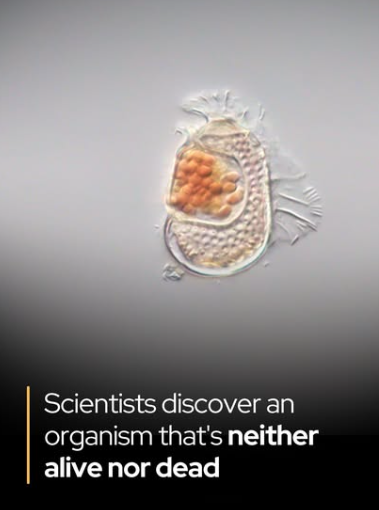
A newly found organism is challenging our definition of life itself. Called Sukunaarchaeum mirabile – named after a tiny Japanese deity – this strange organism doesn’t fit neatly into biology’s rulebook. It’s not quite a virus, but not a fully independent cell either. Instead, it appears to live in the grey zone between life and not-life. Scientists from Canada and Japan stumbled on it while analyzing DNA from a marine plankton species. Within the data, they found a genetic sequence unlike anything they’d seen before. Closer analysis showed that Sukunaarchaeum belongs to the domain Archaea – ancient microbes that are thought to have given rise to all complex life, including us. Like a virus, it relies heavily on its host for energy and most metabolic functions. Its stripped-down genome suggests it has evolved to focus almost entirely on replication, outsourcing nearly everything else. That makes it a biological paradox: part virus, part cell, wholly unique. ["A cellular entity retaining only its replicative core: Hidden archaeal lineage with an ultra-reduced genome.” bioRxiv, 2025]
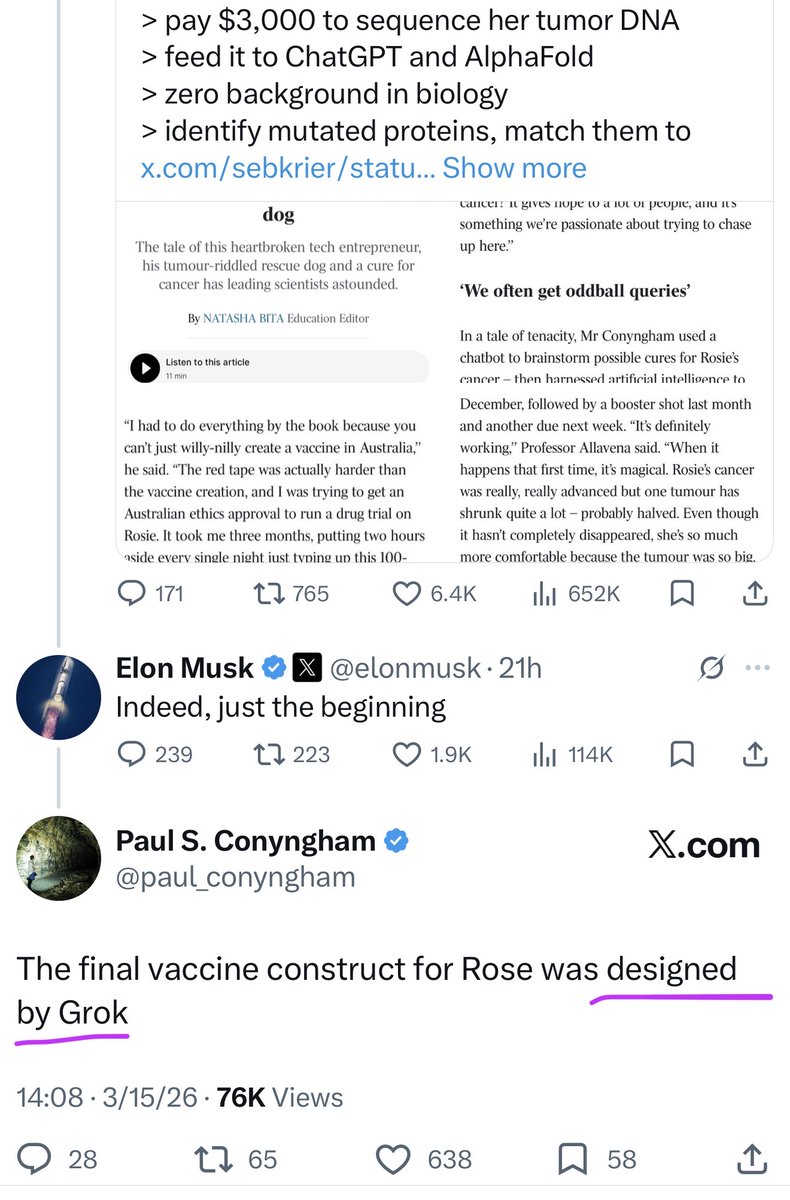
An entrepreneur used AI to create the first-ever bespoke cancer vaccine for his pet dog. Will home recipe vaccines be next? fortune.com/2026/03/15/aus… @FortuneMagazine
In 2011, Japanese telecom company Docomo created one of the most beautiful adverts we've ever seen. A giant xylophone in Kyushu playing Bach's "Jesu, Joy of Man's Desiring" with a wooden ball rolling down its keys.
Grok
Too many headlines are only talking about how a man used ChatGPT to design a cancer vaccine for his dog But the truth is Paul Conyngham himself stated that the final mRNA vaccine construct for his dog Rosie was actually designed by Grok This fact is buried deep underground The
Understanding machines!
Yoshua Bengio says today’s AI is trained by imitating humans. But humans are goal-seeking agents with drives and hidden agendas. He argues we should instead build “understanding machines” modeled on science. Systems that explain observations, practice epistemic humility, and
This is insane. Scientists just restored neural activity in vitrified mouse brain tissue. Researchers in Germany demonstrated that adult mouse hippocampus tissue can resume electrical signaling after cryogenic preservation. The team vitrified hippocampal tissue using cryoprotectants and cooled it to liquid-nitrogen temperatures (−196 °C), where molecular motion nearly stops. Instead of forming damaging ice crystals, the tissue entered a glass like state called vitrification. After thawing, the brain slices did not behave like dead tissue. They showed: • Neurons firing action potentials • Synaptic transmission between neurons • Preserved brain structure (synapses, dendrites, mitochondria) • Long-term potentiation (LTP), the key mechanism behind learning and memory The researchers even attempted vitrification of whole mouse brains inside the skull by perfusing cryoprotectants through the vascular system. In successful cases, neurons in the dentate gyrus of the hippocampus regained electrical activity. Metabolic tests showed mitochondrial respiration remained close to normal levels (~20% reduction) after thawing. This is HUGE. Because if the brain’s physical neural wiring survives, neural activity can restart even after temperatures where biology effectively pauses. This could transform brain research, organ preservation and long-term tissue storage. Acceleration is everywhere.

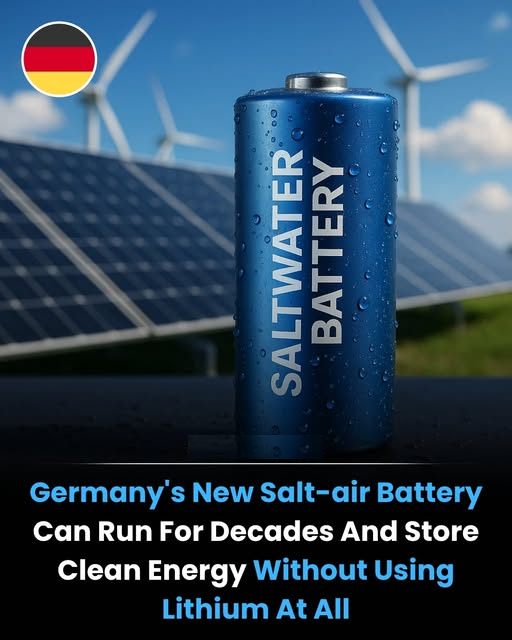
Germany has unveiled a revolutionary salt-air battery that could transform global energy storage. Instead of relying on lithium — a costly, finite, and environmentally challenging resource — this technology uses salt, air, and carbon to create a long-lasting, stable battery with a lifespan measured in decades, not years. The battery works by converting chemical energy into electricity using a reaction between salt and oxygen. Unlike lithium-ion systems, it doesn’t overheat, doesn’t require rare-earth elements, and is nearly 100% recyclable. It also stores energy at a lower cost, making it ideal for large-scale renewable grids. If deployed globally, salt-air batteries could make solar and wind power more reliable by storing energy even during long cloudy winters or calm wind periods. It’s a reminder that nature’s simplest materials — salt and air — may hold the key to humanity’s clean-energy future.

The most expensive test in cancer care costs thousands of dollars per patient and takes days to complete. Doctors use it to figure out who survives immunotherapy. Most hospitals on Earth cannot afford it and that test reveals what lives inside your tumor not just cells, but the entire immune battlefield surrounding them. Until now, that battlefield was invisible to most of the world's doctors. Here is what just happened. Microsoft Research, working with Providence Health and the University of Washington, built an AI called GigaTIME . It was published in Cell, one of the most prestigious scientific journals alive. The old process was that you run a specialized lab test called multiplex immunofluorescence. Days of work and thousands of dollars per sample . Most developing world hospitals never even attempt it. However, GigaTIME skips the lab entirely. It takes the cheap, routine slide that every hospital already produces, the kind that costs $5 to $10 and converts it into the expensive test, virtually, in seconds . It was not trained on a handful of patients. Microsoft trained it on 40 million cancer cells across 21 protein channels. Then they ran it on 14,256 patients across 51 hospitals and over 1,000 clinics . The result is that nearly 300,000 virtual tumor maps , covering 24 cancer types and 306 subtypes . This is the largest population scale study of tumor immune environments ever conducted . From those maps, they found 1,234 statistically significant links between immune activity, biomarkers, and patient survival . Those connections were previously impossible to discover at this scale . Why does this matter? Immunotherapy is not failing and it is being given to the wrong patients. The drugs work but only when doctors know which patients' immune systems will actually fight back . GigaTIME does not replace the oncologist. It gives every doctor on the planet the same data that only elite research hospitals could access before . A secondary hospital in a developing country now has the same diagnostic intelligence as a top US cancer center . The model is now free, open source and available on Microsoft Foundry and Hugging Face right now . Anyone can use it and the implications are not small. Cancer kills 10 million people a year globally. The biggest reason is not a lack of drugs, it is a lack of data to know which drug to use . GigaTIME does not cure cancer. But it tells you, at massive scale, which immune cells are active, which tumors are hiding from the immune system, and which patients will likely respond to treatment . That is the missing layer.

We’ve trained a multimodal AI model to turn routine pathology slides into spatial proteomics, with the potential to reduce time and cost while expanding access to cancer care.

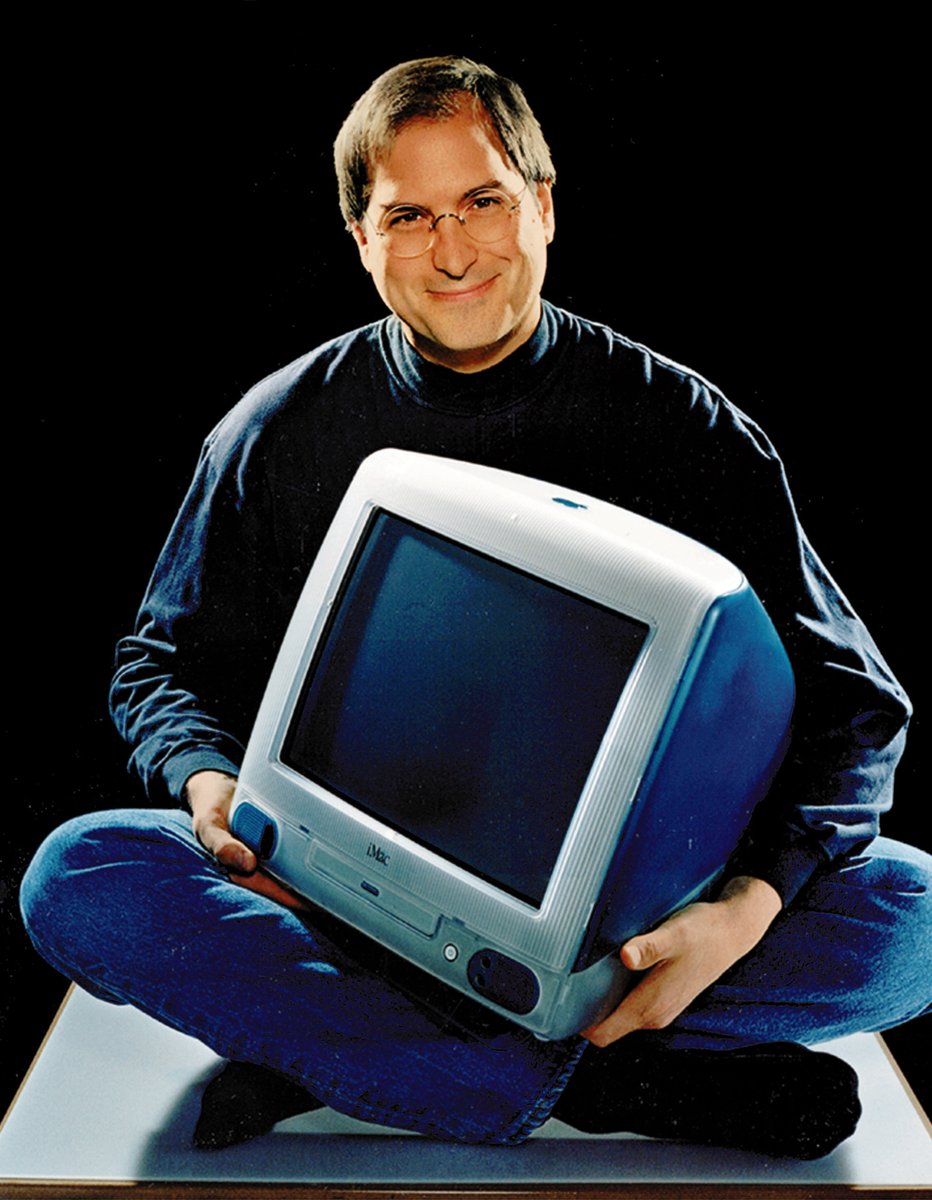
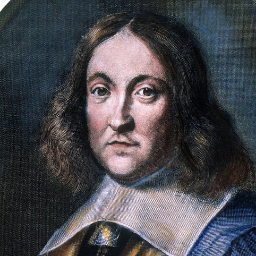
“I would trade all of my technology for an afternoon with Socrates.” ― Steve Jobs
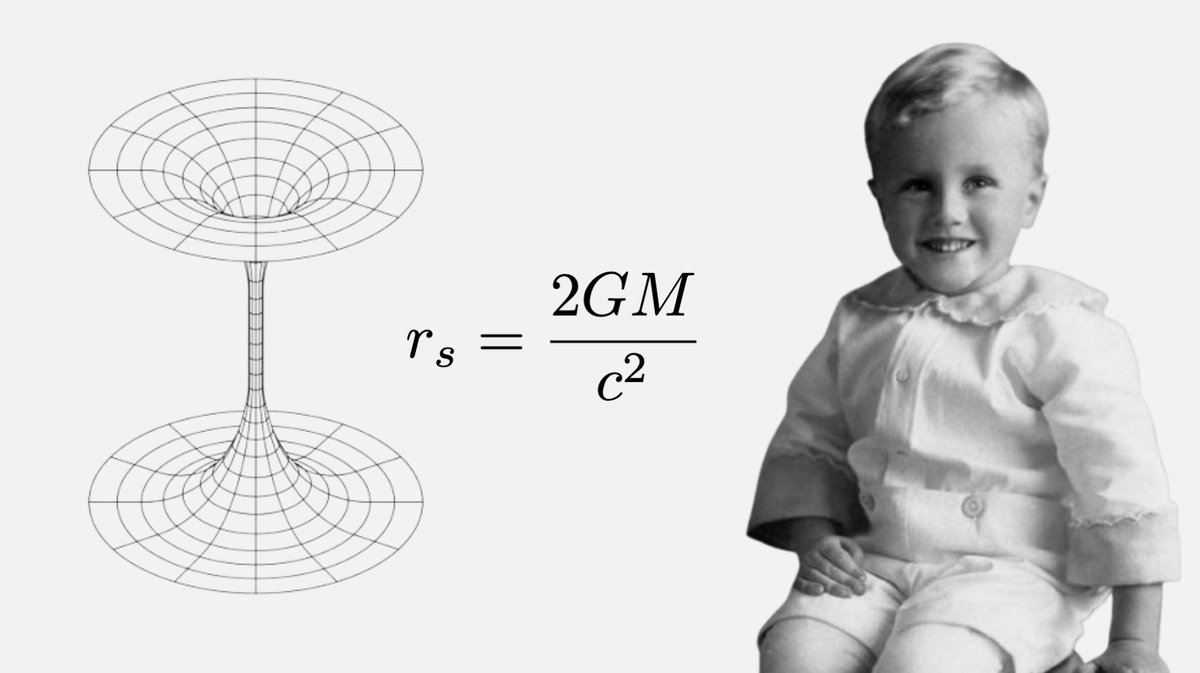
John Wheeler, here at age 4, invented the terms black hole, wormhole, quantum foam, and neutron moderator, and made many important contributions to gravitational and nuclear physics.

Carl Sagan explains why a small metal plaque on a spacecraft is destined to become the oldest surviving artifact of mankind. By launching the Pioneer 10 probe, we’ve sent a message into the void that operates on a timescale far beyond our own. Even though it is the fastest object we’ve ever built, the universe is so vast that it would take 80,000 years just to reach the nearest star—and it’s not even headed that way. While mountain building and erosion will eventually erase every trace of our civilization from the Earth's surface, this plaque will remain intact in the dark of interstellar space for billions of years.
Carl Sagan explains how the ancient Greeks knew the Earth was round and calculated its circumference over 2,000 years ago.
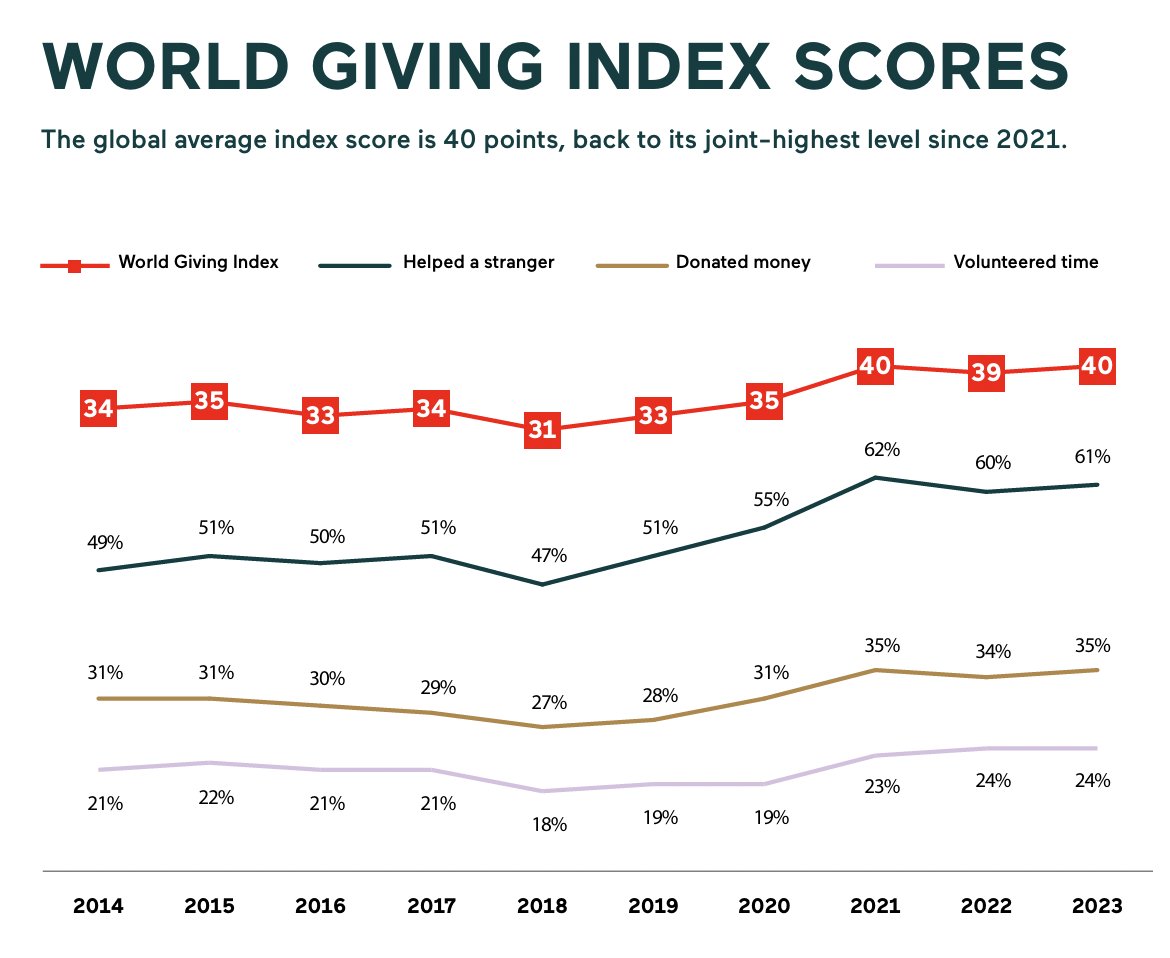
The World Giving Index tracks prosocial behavior such as helping a stranger, donating money, and volunteering time. In what seems like a world of woe, it's important to realize that these are increasing over time, contrary to most people's impressions. cafonline.org/insights/resea…
IBM's 2030 enterprise study reveals a critical gap: while most executives expect quantum computing to transform their industries, far fewer expect their own organizations to actually adopt it. thequantuminsider.com/2026/01/20/ibm…

Scientists Found This Organism Can Survive Some of the Harshest Conditions in the Universe popularmechanics.com/space/a7059940…

New nonprofit launches with at least $500 million to modernize scientific process for AI era trib.al/G69Gg8O
The true population of humans may be quite off.
It’s generally understood that Earth’s population is somewhere around 8.2 billion people. But what if that number is wrong? Actually, what if it’s way wrong? On this week’s episode of The Astounding Pop Mech Show, Andrew Daniels and John Gilpatrick discuss how scientists may

Hailey Arellano @haileyarellan97
4 Followers 498 Following 🌹 Hailey in a golden hour state of mind • sunny side 🍑


Science 2 Ventures @Science2Venture
2K Followers 3K Following S2V - For the builders turning science into reality.
Tim Rowe (he/him) @rowe
9K Followers 130 Following Tim Rowe is Founder and CEO of CIC and CIC Health, and the proud father of three.
Science 2 Ventures @Science2Venture
2K Followers 3K Following S2V - For the builders turning science into reality.


Dr. Marty Makary @DrMakaryFDA
59K Followers 64 Following Official account of the 27th Commissioner of the @US_FDA Catch up with FDA Direct: https://t.co/QJ6g8bH7wc
Natural Philosophy @Naturalphilosy
40K Followers 1 Following Exploring the beauty and absurdity of the human condition.
Dr. Catharine Young @DrCatharineY
39K Followers 20K Following Scientist || Immigrant || Senior Fellow @HarvardChanSPH || Fmr: White House #CancerMoonshot, @CornellBME, @TEDFellow || 🇿🇦 + 🇺🇸
Massimo @Rainmaker1973
4.3M Followers 171 Following Engineer. Selecting and curating pictures and videos trying to awaken your sense of wonder since 2014. Science, tech, art, weather, space, the unusual around us
Valerio Capraro @ValerioCapraro
14K Followers 229 Following Associate Professor at Uni Milan-Bicocca. I write about social behaviour and AI.

Cell News Network @CellRobotics
64 Followers 250 Following Be proud to tell your friends ... I'm offline. https://t.co/TMxzk2U6AE
Phys.org Technology @physorg_tech
13K Followers 0 Following http://t.co/M72GpTDqRx: Technology, Internet, Electronics, Computers, Robotics, High-Tech, Software News Stories
Business of Robotics @BizOfRobotics
729 Followers 817 Following The official Twitter presence of The Business of Robotics. News, commentary and analysis of the global robotics industry.

AI News @AINewsOfficial_
9K Followers 0 Following AI tools, robotics, & BCI news | Exploring the agent economy at https://t.co/3Hx3TQH3rT
Neuroscience News @NeuroscienceNew
506K Followers 5K Following Official Neuroscience News Twitter. Brain research news articles on neuroscience, psychology, AI, neurology, brain cancer, robotics, mental health & science.
BioPharma Dive @BioPharmaDive
14K Followers 309 Following We provide in-depth insight into the most significant news and trends shaping biotech and pharma. Sign up here: https://t.co/sTgs1kxwYE

Athenaeum Book Club @athenaeumbc
234K Followers 387 Following An online book club studying and preserving the great texts of Western Civilization. Join 40,000+ members 👇
Startup Archive @StartupArchive_
156K Followers 2 Following Archiving the world's best startup advice for future generations of founders
Jonathan Haidt @JonHaidt
467K Followers 2K Following Social psychologist at NYU-Stern, working to roll back the phone-based childhood. Please visit https://t.co/ZjBuXdDYYg & https://t.co/7aVAmOTTcT
Human Progress @HumanProgress
177K Followers 772 Following A @CatoInstitute project. Subscribe to our newsletter: https://t.co/j30bRWWLoJ
Boston Business Journ... @BosBizJournal
74K Followers 25K Following The Boston region's source for local business news & events. Part of the American City Business Journals network. Subscribe today! https://t.co/I8dEe5inYZ
Tedros Adhanom Ghebre... @DrTedros
2.0M Followers 2K Following Director-General of the World Health Organization. Retweets are not endorsements
SciTech Era @SciTechera
19K Followers 495 Following Ai, longevity, singularity, robotics, energy and latest SciTech breakthroughs, i bring it to you in a simple, easy-to-read feed ↘️ ! By @Alxom17
Physics In History @PhysInHistory
1.1M Followers 0 Following Photos from the history of physics | © with mentioned Archives. Shared for educational purposes. Einstein portrait © Ullsteinbild. Subscribe for curated papers.
Prestige Couch @prestigecouch_
3K Followers 959 Following Sit back on the Prestige Couch 🛋️ & look at the world thru a Psychodynamic lens. To read more subscribe to my substack click on link
Philosophy Of Physics @PhilosophyOfPhy
115K Followers 0 Following Study physics. Not for formulas, but for the thinking process.
Dr. Pat Soon-Shiong @DrPatrick
155K Followers 2K Following Chairman of Chan Soon-Shiong Family Foundation, Exec Chairman ImmunityBio, Chairman and Chief Executive Officer of Los Angeles Times Media Group (LATMG)
The Free Press @TheFP
999K Followers 121 Following Honest. Independent. Fearless. A free press for free people. Subscribe: https://t.co/xUrlJtH24v
Aakash Gupta @aakashgupta
275K Followers 829 Following ✍️ https://t.co/8fvSCtBv5Q 💼 https://t.co/STzr4nqxnm 🤝 https://t.co/SqC3jTyP03 🎙️ https://t.co/fmB6Zf5UZv
Bari Weiss @bariweiss
1.1M Followers 6K Following Editor-in-Chief @thefp and @CBSNews Host of @thehonestlypod Founder of @nelliebowles fan club
Peter H. Diamandis, M... @PeterDiamandis
399K Followers 850 Following Exec. Chairman @XPRIZE @fountainlife_hq (and others) Working to extend human healthspan. Curator @Abundance360
Stanford University @Stanford
1.0M Followers 584 Following Our mission of discovery and learning is energized by a spirit of optimism and possibility that dates to our founding.
National Geographic @NatGeo
27.9M Followers 179 Following Step into wonder and find your inner explorer with National Geographic 🌎
Discovery to Impact @UTDiscoveries
2K Followers 1K Following We work with innovators and industry to bring UT Austin’s groundbreaking research into the market to change the world.
Science Friday @scifri
686K Followers 14K Following Science Friday is no longer posting on X. Please visit our website at https://t.co/Su60ZXa71a.
CERN @CERN
2.4M Followers 447 Following CERN is the European laboratory for particle physics, home to the #LHC. — All media © CERN, human-generated unless otherwise stated. French: @CERN_FR
MIT Alumni @MIT_alumni
29K Followers 4K Following News & stories about the @MIT community. Managed by Alumni Association staff.
Massachusetts Institu... @MIT
1.4M Followers 569 Following The Massachusetts Institute of Technology is a world leader in research and education. Related accounts: @MITevents @MITstudents @MIT_alumni
Chemical Science @ChemicalScience
98K Followers 4K Following This account has been archived. Stay connected with us on LinkedIn, BlueSky and Facebook.
Wonder of Science @wonderofscience
2.5M Followers 42 Following "The most beautiful thing we can experience is the mysterious. It is the source of all true art and science." - Albert Einstein
Chinese Academy of Sc... @CAS__Science
3K Followers 6 Following Exploring the frontier of science for the benefit of humanity.
U.S. National Science... @NSF
1.2M Followers 146 Following Explore #NSFfunded research that is transforming the world. Social media policy: https://t.co/IRuZ2l1WBu
Science, Space & Robo... @science
753K Followers 118 Following The latest in science, space & robots. Coverage includes news, entertainment, gadgets, deals & more. We may get an affiliate commission on some product links.
WIRED Science @WIREDScience
1.8M Followers 164 Following Bringing the radiothermally generated heat. Sign up for the @WIREDScience newsletter: https://t.co/3N3V4n4F5kTrends for United States
You might like